



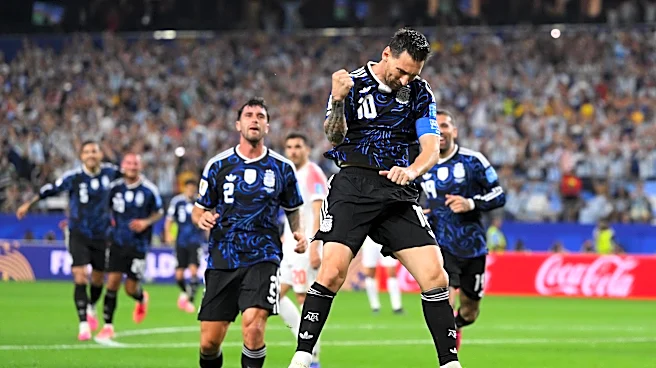


What's Happening?
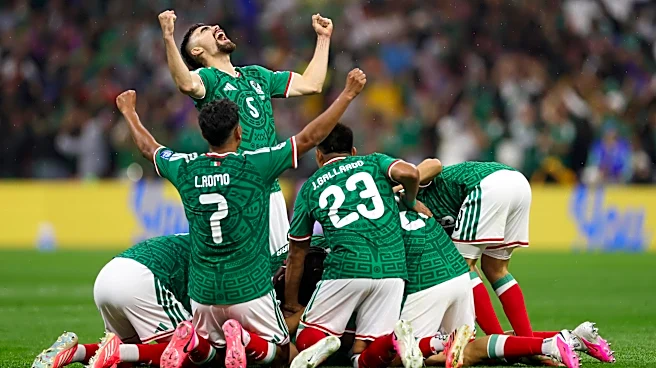
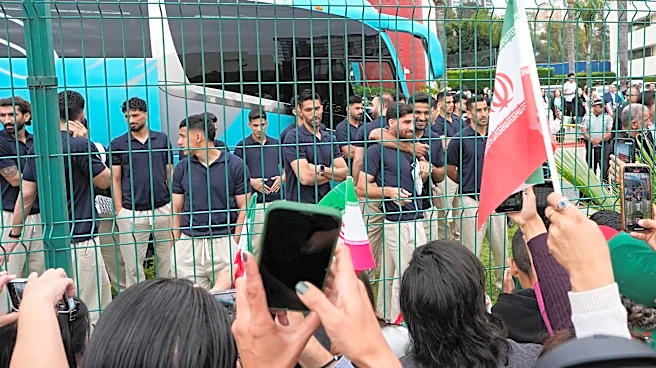
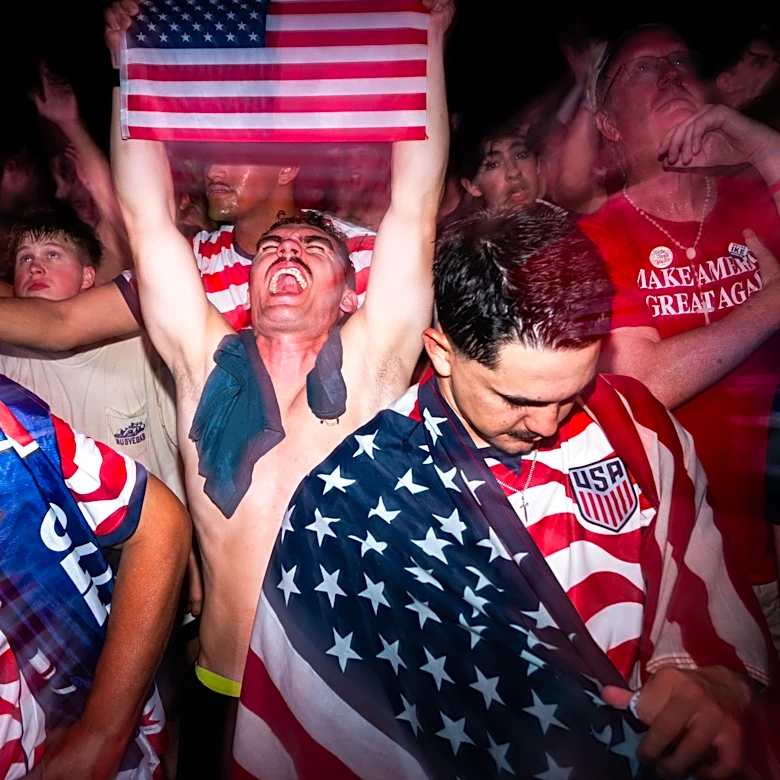
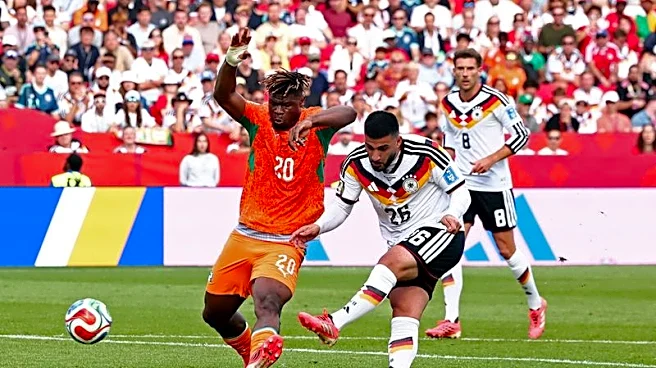
The 2026 World Cup has captivated American audiences, providing a much-needed escape from the political and social tensions in the country. The tournament, hosted in part by the United States, has seen significant engagement from American families who
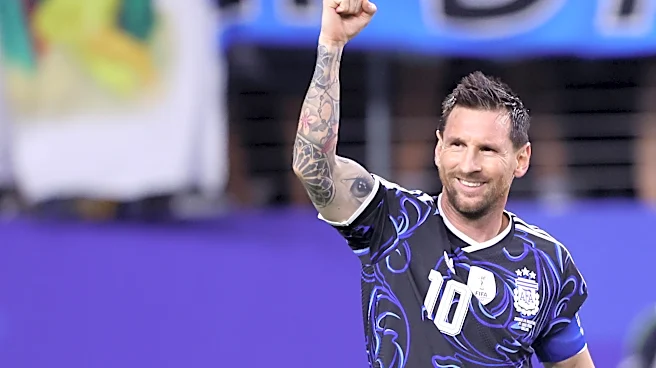
are not typically avid soccer fans. The event has allowed people to connect over the excitement of the games, with Lionel Messi's performances being a particular highlight. The World Cup has also managed to avoid the political spotlight, as President Trump has not attended the opening match, allowing the focus to remain on the sport itself.
Why It's Important?
The World Cup's ability to unite people across different backgrounds and political beliefs highlights the power of sports as a unifying force. In a time when the U.S. is facing significant political and social challenges, the tournament offers a temporary reprieve and a chance for cultural healing. It showcases the potential for international events to foster a sense of global community and shared experience, which is particularly valuable in a politically divided nation.
What's Next?
As the World Cup progresses, it is expected to continue drawing attention and engagement from American audiences. The tournament's ability to maintain focus on the sport rather than political issues could set a precedent for future international events hosted in the U.S. The continued success of the World Cup in the U.S. may also influence future decisions regarding the hosting of similar large-scale events.
Beyond the Headlines
The World Cup's impact extends beyond just sports, as it encourages Americans to engage with global cultures and geography. This exposure can lead to a broader understanding and appreciation of international diversity, which is crucial in an increasingly interconnected world. The event also highlights the potential for sports to serve as a platform for positive social change and international diplomacy.