







What's Happening?
Zhang Yiming, the founder of ByteDance, the parent company of TikTok and Douyin, maintains significant influence over the company despite stepping down as CEO in 2021 and chairman later that year. According to Forbes' 2026 billionaires list, Zhang Yiming's
net worth is estimated at $65 billion, making him China's richest person. His wealth is primarily derived from his founder's stake in ByteDance, coupled with retained voting control through super-voting shares. This arrangement grants him effective control over the world's most valuable private tech company. Zhang Yiming, a software engineer, founded ByteDance in 2012, initially launching the news-recommendation app Toutiao. He later applied the same algorithmic approach to short-form video, leading to the creation of Douyin in 2016 and TikTok internationally in 2017, which quickly became one of the fastest-growing social networks globally.
Why It's Important?
Zhang Yiming's continued voting control over ByteDance has significant implications for the company's strategic direction and its global operations, particularly for TikTok in the U.S. market. Despite his departure from daily management, his ability to influence major decisions means that his vision and priorities can still shape the future of a platform that has become a dominant force in social media and digital content. This structure also highlights the complexities of corporate governance in large, privately held technology companies, where founder control can persist long after leadership transitions. For U.S. users and policymakers, this continued control by a Chinese national over a widely used app raises ongoing concerns about data security, content moderation, and potential foreign influence, especially given past legislative efforts in the U.S. to address TikTok's ownership.
What's Next?
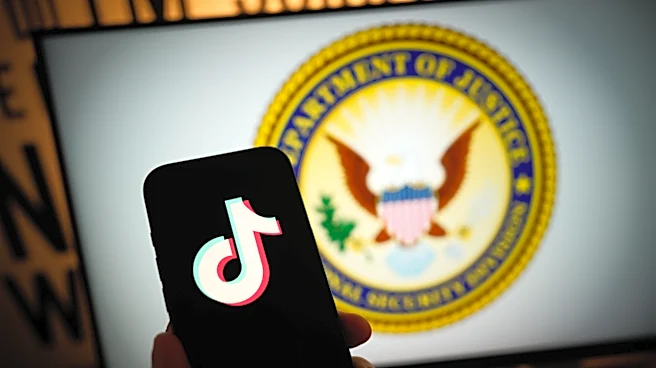
The future of ByteDance and TikTok, particularly in the U.S., remains subject to geopolitical dynamics. U.S. legislation has previously initiated a 'divest-or-ban' process for TikTok, which played out between 2024 and 2025. While the immediate outcome of these legislative efforts is not detailed, the ongoing scrutiny underscores the precarious position of TikTok in the U.S. market. Zhang Yiming's decision to maintain a low public profile and his stated desire to focus on long-term strategy and technology suggest that he will likely continue to exert influence from behind the scenes. Any future regulatory actions or shifts in U.S.-China relations could directly impact ByteDance's valuation and its operational freedom, especially concerning its most popular international product, TikTok.
Beyond the Headlines
The case of Zhang Yiming and ByteDance illustrates a broader trend in the technology sector where founders, even after stepping down from executive roles, retain substantial power through special share structures. This model allows for continuity of vision but can also concentrate decision-making authority, potentially leading to less transparency and accountability compared to publicly traded companies with more dispersed ownership. The reliance on algorithms to drive user engagement, as pioneered by ByteDance with Toutiao and TikTok, has fundamentally reshaped how content is consumed and distributed globally. This algorithmic approach, while highly successful in user acquisition and retention, also presents ethical challenges related to content manipulation, echo chambers, and the spread of misinformation, issues that continue to be debated and addressed by regulators worldwide.