






What's Happening?
Hanesbrands, a major marketer of everyday basic apparel, does not offer soccer-specific apparel, according to a report on the Soccer Uniform Market. The company is not listed among the leading suppliers in any of the main soccer uniform product types,
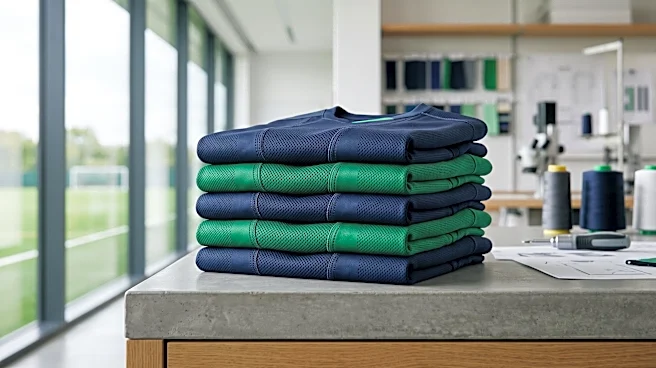
which include shirts, coats, pants, and other categories like socks and shorts. This market is dominated by specialized sportswear companies such as Nike, Adidas, and Puma, which focus on advanced textile engineering, moisture-wicking fabrics, and reinforced padding tailored for the technical demands of soccer uniforms. Other companies like Under Armour, New Balance, and various regional brands also carve out niches within this specialized market. Hanesbrands' absence indicates a strategic focus on its established core product lines rather than venturing into the highly competitive and specialized sports apparel sector.
Why It's Important?
Hanesbrands' decision to abstain from the soccer uniform market highlights a broader trend in the apparel industry where companies often specialize to maintain competitive advantages. By not entering the soccer apparel segment, Hanesbrands avoids direct competition with established giants like Nike and Adidas, who possess significant R&D capabilities and brand recognition in sports performance wear. This strategic choice allows Hanesbrands to allocate resources to its core competencies, such as consumer basics and activewear, where it has a strong market presence. For consumers, this means Hanesbrands continues to focus on its traditional offerings, while those seeking specialized soccer gear must turn to dedicated sports brands. This market segmentation ensures that companies can optimize their production processes and marketing efforts for specific product categories, potentially leading to higher quality and more innovative products within their chosen niches.
What's Next?
Given Hanesbrands' current market positioning and the highly specialized nature of the soccer uniform industry, it is unlikely that the company will enter this segment in the near future. The existing market is characterized by intense competition and a need for significant investment in specialized textile technology and sports marketing. Hanesbrands will likely continue to focus on strengthening its presence in its established categories, such as underwear, t-shirts, and fleece, which cater to a broader consumer base. Future developments for Hanesbrands will probably involve innovations within these core product lines, potential acquisitions of complementary brands, or expansion into new geographic markets for its existing offerings, rather than a pivot into highly specialized sports apparel.
Beyond the Headlines
Hanesbrands' absence from the soccer uniform market underscores the increasing fragmentation and specialization within the global apparel industry. Companies are increasingly choosing to focus on specific niches where they can leverage their expertise and supply chains effectively. This trend can lead to greater efficiency and product innovation within those specialized segments, but it also means that consumers often need to look to different brands for different types of apparel. For Hanesbrands, this strategy reflects a pragmatic approach to business, prioritizing profitability and market leadership in its core areas over diversifying into highly competitive and technically demanding sectors. This specialization also has implications for global supply chains, as different types of apparel require distinct manufacturing processes and material sourcing, further reinforcing the divide between general apparel manufacturers and specialized sports brands.