




What's Happening?
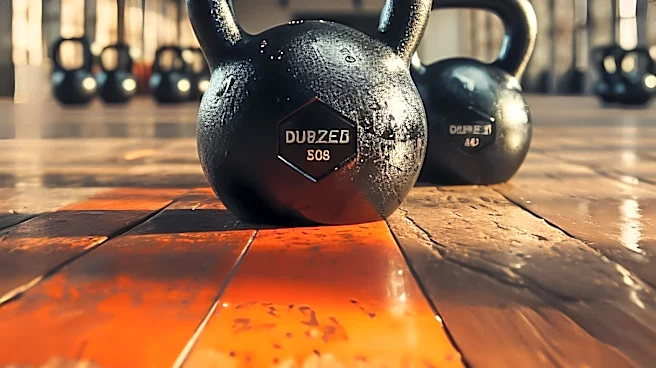
Kettlebell workouts are highlighted as an effective method for building strength, muscle, power, and conditioning. These versatile tools, characterized by their distinctive shape with the load beneath the handle, facilitate a wide range of exercises including
swings, cleans, snatches, presses, and squats. The article details various kettlebell workout routines, from five-minute finishers to full-body circuits, emphasizing their utility for training the entire body. Specific exercises mentioned include the Kettlebell Front-Rack Squat, Kettlebell Push Press, Alternating Reverse Lunge, and Single-Arm Gorilla Row. Kettlebell flows, which link several movements into a continuous sequence, are also presented as a way to combine strength, coordination, and conditioning, moving beyond traditional sets and reps. The routines are designed to challenge individuals with ascending and descending rep schemes, isometric holds, and full-body conditioning sessions.
Why It's Important?
The increasing popularity and accessibility of kettlebell workouts in the U.S. fitness landscape offer significant benefits for individuals seeking efficient and comprehensive training solutions. Their versatility means that people can achieve substantial fitness gains without requiring extensive space or a multitude of equipment, making them ideal for home workouts or smaller gym environments. This trend supports a broader movement towards functional fitness, where exercises mimic real-world movements, improving overall physical capability and reducing injury risk. For the fitness industry, the continued adoption of kettlebells signifies a demand for innovative and effective training modalities, potentially influencing gym equipment purchases, personal training programs, and the development of new workout classes. The emphasis on full-body engagement and conditioning also aligns with public health goals of promoting active lifestyles and combating sedentary behaviors.
What's Next?
As awareness of kettlebell benefits grows, it is likely that more fitness professionals will integrate these tools into their training methodologies, leading to an expansion of specialized kettlebell classes and certifications. Manufacturers may also see increased demand for diverse kettlebell weights and designs, catering to a wider range of fitness levels and exercise preferences. Online fitness platforms and apps are expected to feature more kettlebell-specific workout programs, making these routines accessible to a broader audience. Furthermore, research into the physiological benefits of kettlebell training may continue to emerge, providing further scientific backing for their effectiveness and potentially influencing exercise guidelines. The focus on continuous, flowing movements could also inspire new hybrid workout styles that combine elements of strength, cardio, and mobility.
Beyond the Headlines
Beyond the immediate physical benefits, the adoption of kettlebell training reflects a deeper cultural shift in how Americans approach fitness. There's a growing appreciation for efficiency and functional movement, moving away from isolated muscle training towards more holistic and integrated approaches. The challenge and coordination required for kettlebell flows can also foster improved body awareness and mental focus, contributing to overall well-being. This trend might also highlight a desire for more engaging and less monotonous workout experiences, as the dynamic nature of kettlebell exercises can keep routines fresh and motivating. The community aspect of partner workouts, as mentioned in one of the routines, also underscores the social dimension of fitness, promoting shared goals and mutual encouragement.