








What's Happening?
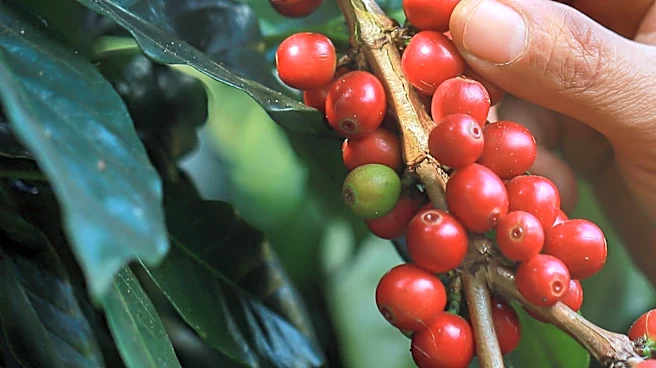
Arabica coffee prices have dropped significantly due to dry weather conditions in Brazil, which are expected to accelerate the coffee harvest. Somar Meteorologia reported no rainfall in Minas Gerais, Brazil's largest coffee-growing region, for the week
ending August 2. This has led to a faster harvest pace, although it remains behind last year's schedule. Meanwhile, ICE Arabica coffee inventories have decreased to a 2.5-year low, supporting prices. In contrast, robusta coffee inventories have risen, putting downward pressure on prices.
Why It's Important?
The fluctuation in coffee prices due to weather conditions in Brazil highlights the vulnerability of agricultural commodities to climate factors. The decline in Arabica coffee prices could impact coffee producers' revenues and influence global coffee market dynamics. Additionally, the potential effects of the El Niño weather pattern on future coffee crops could lead to further price volatility, affecting both producers and consumers worldwide.
What's Next?
As the El Niño weather pattern develops, it may delay rains in Brazil, potentially impacting the next coffee crop. This could lead to increased price volatility and supply chain disruptions. Coffee producers and traders will need to monitor weather forecasts closely and adjust their strategies accordingly to mitigate risks associated with climate variability.
Beyond the Headlines
The ongoing changes in coffee production and pricing due to climate conditions may prompt a reevaluation of agricultural practices and investment in more resilient crop varieties. This could also lead to increased interest in sustainable farming practices and technologies to better adapt to changing environmental conditions.