








What's Happening?
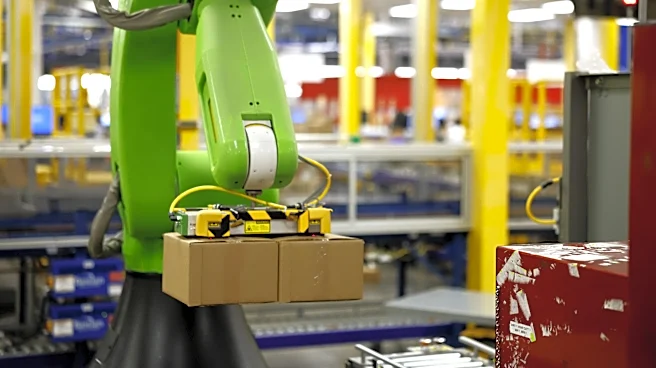
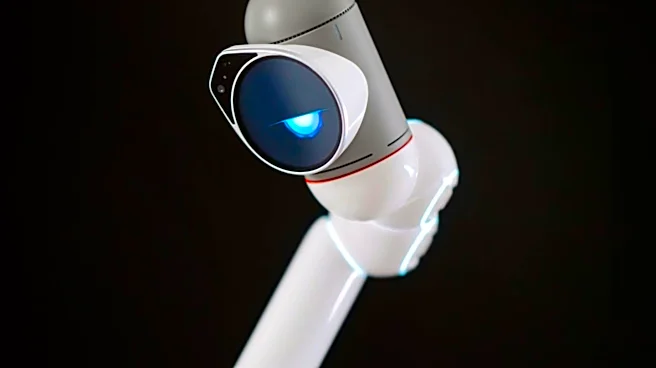
The integration of collaborative robots (cobots) with autonomous mobile robots (AMRs) is transforming warehouse operations by improving efficiency and addressing labor shortages. Cobots, particularly seven-axis models, are being mounted on AMRs to enhance
their range of motion and precision in tasks such as picking, assembly, and palletizing. This integration reduces the need for multiple robot stations and minimizes manual touchpoints, streamlining workflows across facilities. The compact design of next-generation cobots allows them to operate directly from AMR batteries, eliminating the need for large control cabinets and improving their functionality and footprint.
Why It's Important?
The adoption of cobots and AMRs in warehouses is crucial for addressing ongoing labor challenges and improving productivity. As these technologies become more prevalent, they offer a cost-effective solution for repetitive tasks, freeing workers to focus on more complex activities. This not only enhances operational efficiency but also improves job satisfaction by reducing physical strain and injury. The integration of cobots and AMRs supports the industry's need for flexible and precise automation solutions, making it a vital component of modern warehouse management strategies.
What's Next?
As the demand for warehouse automation continues to grow, decision-makers should evaluate the benefits of integrating cobots with AMRs to support their operations. This includes considering the impact on skilled workers and ensuring that safety protocols are in place for interactions with these technologies. The industry is likely to see further advancements in cobot and AMR capabilities, with ongoing research and development focused on enhancing their functionality and adaptability. Companies are encouraged to invest in these technologies to remain competitive and address the challenges posed by labor shortages and increasing productivity demands.