






What's Happening?
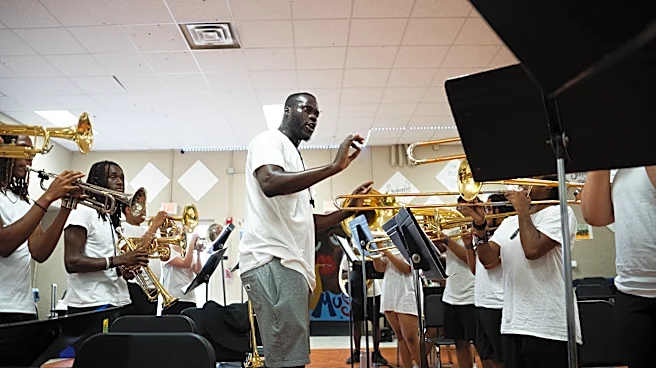
The Youth Performing Arts School (YPAS) at duPont Manual High School in Louisville, Kentucky, went viral after students posted videos claiming their production of the musical 'Ragtime' was being shut down by Jefferson County Public Schools (JCPS). The students alleged
the district cited concerns that the production would 'offend too many members of our community.' However, JCPS issued a statement clarifying that the show has not been canceled and is proceeding as planned. The district attributed the confusion to a miscommunication during its 'due diligence' review process, which involved consulting with community organizations, other school districts, and arts education programs to ensure the production was presented responsibly, given its sensitive themes of immigration, race, class, and identity.
Why It's Important?
This incident highlights the delicate balance between artistic freedom, educational responsibility, and community sensitivities in U.S. public education. The rapid viral spread of the students' initial claims, and the subsequent involvement of Broadway stars like Kristin Chenoweth and Sarah Jessica Parker, underscore the power of social media in amplifying student voices and influencing public discourse. The district's review process, aimed at providing appropriate context and support for a production dealing with potentially sensitive historical realities, reflects a broader challenge faced by educational institutions in presenting complex topics. While JCPS emphasized its goal was not to prevent student participation but to ensure thoughtful engagement, the initial miscommunication caused significant distress and public outcry, demonstrating the importance of clear and transparent communication in educational administration.
What's Next?
JCPS has apologized for the confusion and stated that the 'Ragtime' production will move forward as planned. YPAS students later posted a new video confirming that JCPS had reversed its perceived decision. The district's statement indicates a commitment to ensuring students and audiences have the necessary context and guidance to engage with the production's themes responsibly. This event may lead to a reevaluation of communication protocols within JCPS and potentially other school districts when reviewing sensitive artistic or educational content. The incident also serves as a reminder for educational institutions to proactively address potential community concerns while upholding the educational value and artistic integrity of student productions.
Beyond the Headlines
The 'Ragtime' controversy at YPAS delves into deeper questions about censorship, artistic interpretation, and the role of education in confronting difficult historical narratives. The musical 'Ragtime' itself is known for its exploration of racial and social tensions in early 20th-century America, making it a powerful, yet potentially challenging, piece for a high school production. The initial reaction from students and the broader artistic community suggests a strong belief in the importance of presenting such works, even if they contain sensitive language or subject matter. This incident reflects an ongoing cultural debate in the U.S. about how educational institutions should navigate historical accuracy, artistic expression, and community comfort, particularly when dealing with themes that resonate with contemporary social justice issues. It underscores the ethical responsibility of educators to prepare students and audiences for thoughtful engagement with complex and potentially uncomfortable truths.