






What's Happening?
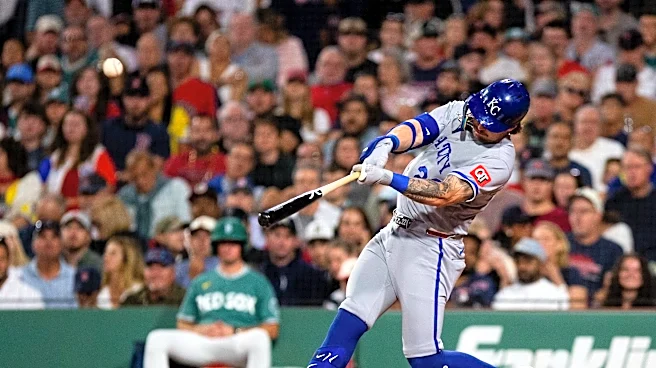
Kansas City Royals pitcher Seth Lugo recently delivered a solid performance against the Boston Red Sox, pitching five innings, allowing two runs, scattering seven hits, and striking out seven batters, contributing to a Royals victory. Lugo's career has
been characterized by transitions between relief pitching and starting roles. He has consistently expressed a desire to return to starting pitching, a goal he has now achieved and turned into a successful 'second act' since becoming a free agent. His experience as a late-innings reliever, facing high-pressure situations and top hitters, has reportedly equipped him with confidence and a better understanding of how to navigate games as a starter. Lugo's latest outing showcased improved command, with pitches located more effectively on the edges of the strike zone, leading to more swings and misses and less hard contact from opposing batters. This performance comes after a period where he had reportedly struggled, making his recent success particularly noteworthy.
Why It's Important?
Seth Lugo's successful transition back to a starting pitcher role holds significant importance for the Kansas City Royals, particularly given his past struggles and the team's overall performance. His ability to deliver strong outings as a starter provides much-needed stability to the rotation, which can be a critical factor for any MLB team. For Lugo himself, this 'second act' as a starter validates his long-held ambition and demonstrates his adaptability and growth as a pitcher. His experience in high-leverage relief situations has seemingly enhanced his strategic approach to starting, allowing him to better understand and exploit hitter weaknesses. This success could also influence other pitchers in similar career situations, demonstrating that a return to starting after a relief stint is not only possible but can be highly effective. The Royals' reliance on such performances underscores the value of veteran pitchers who can adapt and perform in different roles, contributing to the team's competitiveness and potentially impacting their standing in the league.
What's Next?
Following his strong outing, Seth Lugo is scheduled to pitch again for the Royals in an upcoming series against the Houston Astros. This next start will be crucial in determining if his improved command and performance against the Red Sox represent a sustained trend or an isolated success. The Royals will be looking for Lugo to continue providing solid innings, especially as the season progresses and the team aims to improve its overall record. His ability to consistently deliver quality starts will be vital for the team's pitching staff, potentially influencing their strategic decisions regarding the rotation. Lugo's continued success could also impact his future contract negotiations, as a proven starter commands a different market value than a reliever. Other teams and pitchers with similar career trajectories will likely be observing his performance closely, as it could set a precedent for career longevity and role flexibility in professional baseball.
Beyond the Headlines
Seth Lugo's journey from a successful reliever to a re-established starter highlights a deeper narrative within professional baseball: the evolving roles and adaptability required of pitchers. The distinction between starters and relievers has become increasingly fluid, with many pitchers, like Lugo and Garrett Whitlock, moving between roles based on team needs and individual development. Lugo's assertion that his relief experience made him a better starter underscores the value of diverse pitching experiences. This trend suggests a shift in how pitching talent is developed and utilized, emphasizing versatility and mental fortitude in high-pressure situations. The success of pitchers like Lugo in reinventing their careers as starters after excelling in relief challenges traditional notions of pitching specialization and could lead to more flexible player development strategies across MLB. It also speaks to the psychological aspect of the game, where confidence gained in one role can translate into improved performance in another, demonstrating the importance of mental resilience in a demanding sport.