






What's Happening?
Oracle has increased its annual dividend to $2 per share, marking the 12th consecutive year of dividend raises. The company recently distributed a quarterly payment of $0.50 per share. This decision comes as Oracle is undertaking a massive AI infrastructure
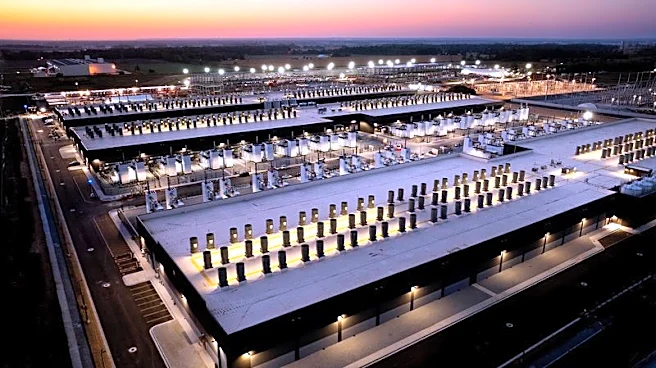
build-out, with capital expenditures reaching approximately $55.7 billion in fiscal year 2026, exceeding its $50 billion target. For fiscal year 2027, Oracle projects a net cash outlay of around $70 billion, with an additional $20 billion to $25 billion funded by partners. This significant spending has resulted in a negative free cash flow of about $23.7 billion. To finance its ongoing build-out, management has indicated plans to raise $40 billion to $50 billion through new debt and equity issuance, while simultaneously maintaining its dividend payouts.
Why It's Important?
Oracle's continued dividend increase, despite substantial investments in AI infrastructure and negative free cash flow, signals the company's confidence in its long-term growth strategy, particularly in the AI sector. For U.S. investors, this demonstrates a commitment to shareholder returns, even as the company navigates a capital-intensive expansion phase. The aggressive AI build-out is crucial for Oracle to remain competitive in the rapidly evolving cloud and AI markets, potentially positioning it for significant future revenue growth from its cloud infrastructure and database services. However, the reliance on debt and equity issuance to fund these investments, while simultaneously paying dividends, introduces financial risk. The success of this strategy hinges on Oracle's ability to convert its AI backlog into substantial cloud revenue and effectively manage its increasing debt load, impacting its financial stability and investor confidence.
What's Next?
The immediate future for Oracle will involve closely monitoring the execution of its AI infrastructure build-out and its ability to generate revenue from these investments. The company's cloud infrastructure and database revenues are expected to continue growing, and its remaining performance obligations are already in the hundreds of billions of dollars. Investors will be watching for signs that Oracle's AI contracts are successfully converting into real cloud revenue, which is essential for justifying the significant capital expenditures and managing the increased debt. The company's ability to manage its larger debt load and the potential risks associated with customer concentration, particularly around partners like OpenAI, will be critical factors in determining the long-term safety of its dividend and overall financial health. Any challenges in these areas could impact future dividend policies and stock performance.
Beyond the Headlines
Oracle's strategy highlights a broader trend in the tech industry where established companies are making massive, high-stakes investments in AI to secure future market leadership. This aggressive pursuit of AI dominance, even at the cost of short-term free cash flow, reflects the perceived transformative power of AI across various sectors. The decision to continue dividend payouts amidst such heavy investment also reveals the complex interplay between shareholder expectations, corporate strategy, and financial engineering. It raises questions about the sustainability of such models and the potential for 'AI bubbles' if the promised returns do not materialize as expected. Furthermore, the concentration of AI infrastructure development among a few tech giants could lead to increased market consolidation and influence over critical technological advancements, impacting competition and innovation in the broader tech ecosystem.