




What's Happening?
Jewish food traditions for Rosh Hashanah are evolving, with families adapting classic dishes and incorporating new favorites. While main courses and symbolic foods (simanim) often remain constant, desserts are seeing more flexibility. Honey cake, a traditional
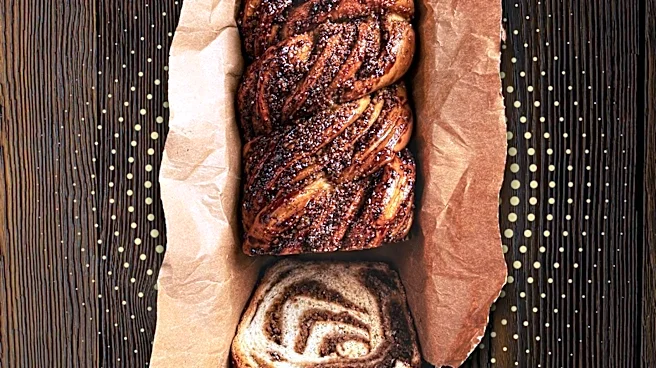
Rosh Hashanah dessert, is being replaced by babka in some households, reflecting changing tastes. Babka, a staple in some Connecticut Jewish communities for decades, has recently gained wider popularity. Historically, Jewish babka originated in Eastern Europe in the early 19th century, made from extra challah dough filled with ingredients like cinnamon, jam, or honey. Jewish bakers used oil to keep it parve, suitable for consumption after meat meals. Chocolate babka, a later American Jewish contribution, has also become a beloved variation. Artisan bakeries, like Emmer & Cane, are now specializing in North American-style baked goods, including various babka flavors, catering to evolving preferences.
Why It's Important?
The evolution of Jewish food traditions highlights a dynamic cultural landscape where heritage meets contemporary preferences. The shift from traditional honey cake to babka for Rosh Hashanah desserts reflects how food traditions are not static but adapt to changing tastes and availability. The resurgence of babka, particularly its chocolate variant, showcases the influence of American Jewish culinary contributions and broader food trends. This adaptation ensures that traditions remain relevant and enjoyable for younger generations, fostering continued engagement with cultural practices. The role of local bakeries, both historical and modern, in shaping and preserving these culinary traditions is also significant, as they provide the authentic flavors that become integral to family celebrations.
What's Next?
As Jewish communities continue to celebrate holidays like Rosh Hashanah, the trend of adapting and personalizing traditional foods is likely to persist. This could lead to further innovations in classic recipes and the integration of new dishes that resonate with contemporary palates. Artisan bakeries specializing in traditional yet modernized Jewish baked goods may see increased demand, catering to those seeking both nostalgia and novel flavors. The ongoing dialogue within families about which foods to include in holiday meals will shape future culinary traditions, ensuring that they remain meaningful and enjoyable for all generations. This dynamic process will continue to enrich the diverse tapestry of Jewish cuisine in the U.S.
Beyond the Headlines
The story of babka's evolving role in Jewish holiday meals goes beyond mere culinary preference; it reflects broader themes of cultural identity, adaptation, and the transmission of heritage. Food, in this context, becomes a powerful medium for connecting generations and preserving cultural memory, even as its forms change. The debate between cinnamon and chocolate babka, famously highlighted in popular culture, underscores the personal and communal significance attached to these dishes. The ability of a community to embrace new interpretations while honoring historical roots demonstrates a vibrant and resilient cultural identity. This culinary evolution also speaks to the broader American experience, where diverse traditions constantly interact and influence one another, creating new expressions of heritage.