






What's Happening?
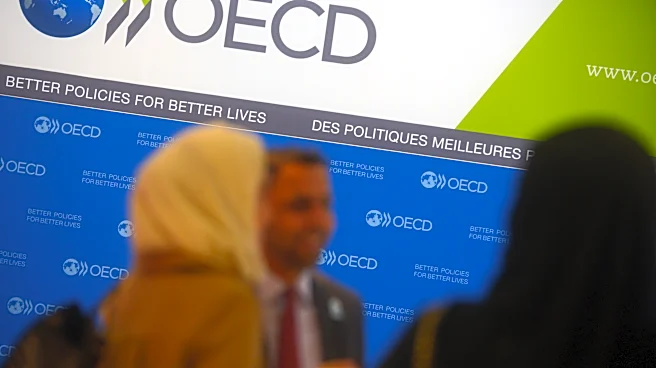
The Organisation for Economic Co-operation and Development (OECD) has released its Africa Capital Markets Report 2026, indicating significant growth in African capital markets in 2025. Equity market capitalization on the continent rose by 49%, more than
double the global growth rate. Despite this robust performance, the OECD warns that the sector remains too shallow and concentrated to adequately support Africa's development needs. African economies have shown resilience against global economic pressures, maintaining access to capital market financing. However, the region's financial markets are considerably smaller and less liquid compared to other emerging markets, which limits their capacity to provide long-term financing and buffer against external shocks. The report estimates Africa's domestic capital pool at over $4.4 trillion, representing only about 0.9% of global financial assets, despite the continent accounting for approximately 2.7% of global GDP. Nigeria was highlighted as one of the strongest-performing equity markets, with a 77% increase in market capitalization in 2025.
Why It's Important?
The OECD's findings underscore a critical paradox in African financial markets: strong growth potential coexisting with significant structural weaknesses. The underdevelopment and concentration of these markets mean that while they can attract capital, they struggle to channel it effectively into productive investments necessary for sustainable economic development. This situation impacts businesses and governments across Africa, limiting their access to long-term funding and increasing reliance on external financing. For international investors, the report signals both opportunity in high-growth markets like Nigeria and the need for caution due to liquidity and depth issues. The reliance on government securities by institutional investors, such as pension funds, also highlights a lack of diverse investment opportunities, which can hinder private sector growth and innovation. Addressing these issues is crucial for unlocking Africa's full economic potential and integrating it more robustly into the global financial system.
What's Next?
The OECD report suggests that governments and regulators in Africa need to implement policies that improve mechanisms for channeling domestic savings into productive investments through deeper domestic and regional capital markets. This includes expanding pension coverage, particularly among self-employed and informal workers, improving compliance and enforcement, and encouraging sustained contributions. Regulators are also advised to progressively allow greater portfolio diversification for institutional investors, supported by stronger risk management and supervisory frameworks. Furthermore, there is a call for strengthening corporate governance, improving disclosure, and enhancing regulation to boost confidence in African capital markets. The development of corporate bond markets is also crucial to provide businesses with alternative sources of long-term funding, reducing their dependence on bank financing. These steps aim to transform the current growth momentum into a more sustainable and inclusive financial ecosystem.
Beyond the Headlines
The OECD's analysis points to deeper systemic issues beyond mere market size. The significant informal economy in Africa, where about 85% of employment is informal, poses a major obstacle to expanding the institutional investor base. This informalization limits access to formal pension and insurance arrangements, thereby restricting the pool of domestic savings that could be mobilized for investment. The report implicitly highlights the need for broader economic reforms that formalize economic activities and integrate informal workers into the financial system. Furthermore, the concentration of capital markets in a few countries and the limited use of equity markets for fresh corporate capital suggest a need for policy interventions that foster entrepreneurship and facilitate access to capital for a wider range of businesses. Addressing these underlying structural challenges is essential for Africa to build resilient and inclusive financial markets that can truly support long-term economic transformation.