


What's Happening?
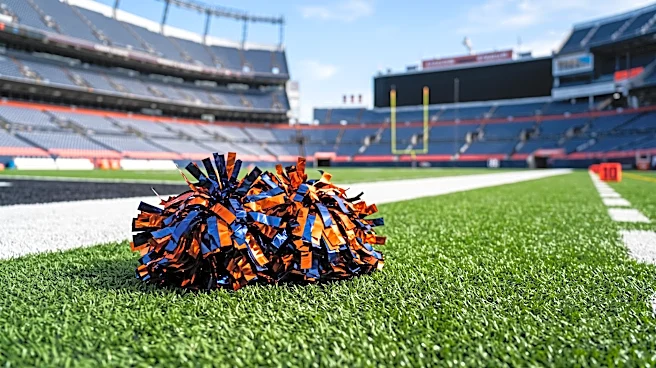
Ann-Marie Muscarello, a cheerleader for the Denver Broncos, has gained significant attention on social media for showcasing her 'double life' as both an NFL cheerleader and an orthopedic nurse. Her TikTok video, contrasting her Sunday game-day activities
with her Monday nursing shifts, has gone viral, prompting numerous comments from fans. Many users expressed admiration for her dedication and simultaneously voiced strong opinions regarding the compensation of NFL cheerleaders. The discussion highlights the demanding nature of cheerleading, often requiring individuals to maintain full-time careers or pursue education alongside their commitments to professional sports teams. This situation underscores a long-standing debate about the financial remuneration for NFL cheerleaders, who are typically employed as independent contractors by individual franchises rather than directly by the NFL.
Why It's Important?
This renewed public discussion about NFL cheerleader pay is significant because it brings to light the economic realities faced by many individuals in professional sports support roles. The average annual earnings for an NFL cheerleader, estimated at around $22,500, stand in stark contrast to the average registered nurse's salary of $97,550. This disparity raises questions about fair compensation within the multi-billion dollar NFL industry. The situation also highlights the broader issue of labor practices for independent contractors in various sectors, where benefits and wages often fall below those of traditional employees. Increased public awareness and pressure, as seen with the Dallas Cowboys cheerleaders receiving a significant pay raise after a documentary series, could potentially lead to industry-wide changes, impacting the financial stability and career prospects of cheerleaders across the league.
What's Next?
The increased public scrutiny and calls for better pay, fueled by stories like Ann-Marie Muscarello's, could prompt more NFL franchises to re-evaluate their compensation structures for cheerleaders. Following the precedent set by the Dallas Cowboys, who raised their cheerleaders' pay by 400% in 2025, other teams might face pressure to improve wages to attract and retain talent. This could lead to a shift from the current model where cheerleaders are often paid an hourly rate for practice and a flat fee for game days, potentially moving towards more competitive salaries or benefits. The ongoing conversation may also encourage further media coverage and advocacy efforts, potentially leading to collective bargaining or policy changes that better support NFL cheerleaders, who are currently employed as independent contractors by individual franchises.
Beyond the Headlines
The narrative surrounding Ann-Marie Muscarello's dual career extends beyond mere compensation, touching upon broader societal perceptions of labor, passion, and professional value. It challenges the romanticized image of professional cheerleading by exposing the financial sacrifices and demanding work ethic required. This situation also highlights the ethical considerations for large, profitable organizations like the NFL regarding the fair treatment of all individuals contributing to their brand and success. The public's reaction reflects a growing awareness and demand for equitable labor practices, even in highly visible and traditionally undervalued roles. This could contribute to a larger cultural shift where the value of 'passion work' is not solely measured by intrinsic satisfaction but also by fair economic recognition, potentially influencing other industries where similar disparities exist.