




What's Happening?
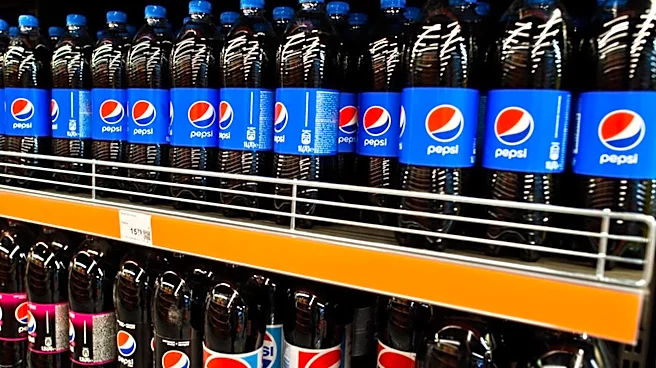
PepsiCo has lowered its 2026 core earnings per share (EPS) growth forecast to 1%-2%, down from a previous outlook of 4%-6%, and its core EPS growth to 2.5%-3.5%, from an earlier 5%-7%. This adjustment comes despite the company beating third-quarter earnings estimates,
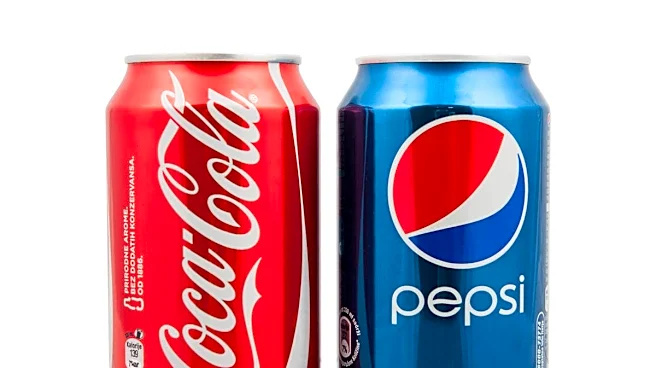
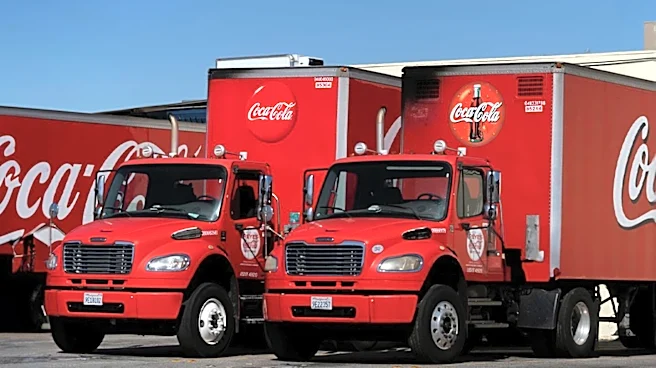
reporting $2.34 EPS and $25.27 billion in revenue. In contrast, Coca-Cola reported a 7% rise in Q3 revenue to $13.4 billion, surpassing analyst estimates, with comparable EPS increasing by 11% to $0.91. Coca-Cola's global sales volume grew 5%, driven by markets in India, China, Mexico, and Brazil, and its Zero Sugar volume jumped 16%. Adding to PepsiCo's challenges, KFC announced it would switch to Coca-Cola beverages across the U.S. starting in January 2027, ending PepsiCo's long-standing role as KFC's exclusive U.S. beverage supplier.
Why It's Important?
This divergence in performance between PepsiCo and Coca-Cola is highly significant for the U.S. beverage and snack industry, indicating a potential shift in market dynamics. PepsiCo's lowered earnings outlook, despite beating Q3 estimates, suggests underlying operational challenges, particularly in North America, where stagnant demand and elevated costs are impacting profitability. This could lead to increased investor scrutiny and pressure for more aggressive strategic changes. Conversely, Coca-Cola's strong Q3 results and its new partnership with KFC signal a strengthening market position and potential for increased market share in the U.S. fast-food sector. The competitive landscape between these two giants influences pricing strategies, product innovation, and marketing efforts across the entire consumer staples sector, affecting suppliers, retailers, and ultimately, consumers.
What's Next?
PepsiCo is expected to continue its North American reset, focusing on cost reductions, renewed brand investment, and portfolio innovation to address its growth challenges. The company will need to demonstrate the effectiveness of these strategies to regain investor confidence and improve its earnings outlook. The transition of KFC's beverage supply to Coca-Cola will fully roll out by spring 2027, which will likely impact PepsiCo's revenue from its restaurant channel. Coca-Cola, on the other hand, is poised to capitalize on its strong Q3 performance and the new KFC deal, potentially expanding its market presence and brand visibility. Analysts will closely monitor both companies' future earnings reports and strategic announcements to assess the long-term implications of these developments on their respective market positions and financial health.
Beyond the Headlines
The contrasting fortunes of PepsiCo and Coca-Cola highlight broader trends in the consumer beverage and snack industry, including evolving consumer preferences for healthier options and zero-sugar products, as evidenced by Coca-Cola Zero Sugar's growth. PepsiCo's struggles in North America underscore the challenges of maintaining growth in mature markets amidst changing consumer habits and intense competition. The shift in KFC's beverage supplier is not merely a business transaction but also a symbolic victory for Coca-Cola, potentially influencing other fast-food chains' decisions regarding their beverage partnerships. This dynamic competition drives innovation in product development, marketing, and supply chain efficiency, ultimately shaping the choices available to U.S. consumers and the profitability of the entire sector. The emphasis on 'discounted valuation' for PepsiCo suggests that some investors see a turnaround opportunity, indicating a complex and evolving investment landscape.