






What's Happening?
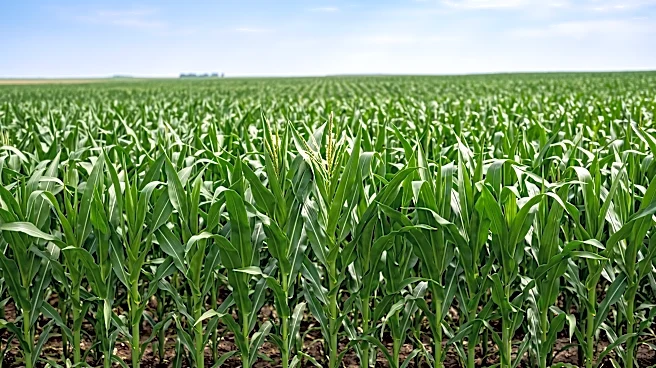
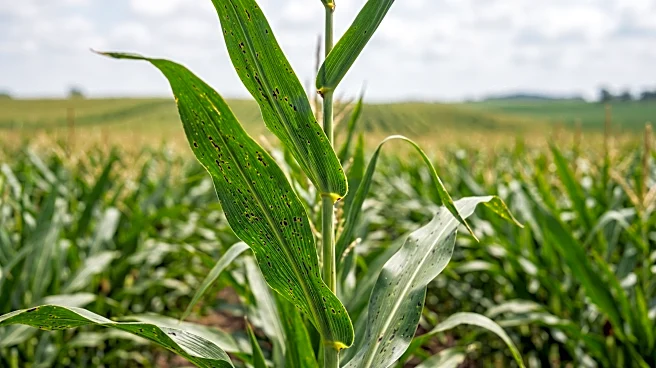
In 2026, the severity of tar spot disease on corn crops in eastern Kansas was notably lower than in 2025, according to Katie Strathman, a technical service representative for BASF. While early wet conditions did lead to some tar spot development, the disease did not reach
the widespread levels observed in the prior year. As conditions became drier, the progression of these diseases slowed. Despite the reduced tar spot, other diseases such as gray leaf spot and southern rust were present, though southern rust appeared on its typical timeline rather than an accelerated one. This decrease in disease pressure meant that the decision to apply fungicides in 2026 was less frequently justified compared to 2025, as noted in the Crop Protection Network's guide on fungicide use in field crops.
Why It's Important?
The reduced severity of tar spot in 2026 has significant implications for U.S. agricultural practices and the economic well-being of corn farmers. A less severe disease year can lead to lower input costs for farmers, as the need for fungicide applications decreases. This directly impacts profitability by reducing expenses related to chemical treatments and application labor. Furthermore, healthier crops are less prone to lodging (falling down), which was a major concern in 2026 due to wet harvest conditions. Farmers who proactively used fungicides in 2025, a heavy disease year, were able to protect their crops and maintain stalk strength, preventing yield losses and reducing the time and fuel costs associated with harvesting fallen crops. The variability in disease pressure year-over-year underscores the importance of adaptive farm management strategies and timely decision-making regarding crop protection.
What's Next?
Looking ahead, the experience of 2026 highlights the ongoing need for farmers to monitor disease conditions closely and make informed decisions about fungicide use. While 2026 saw lower tar spot pressure, the presence of other diseases like gray leaf spot and southern rust indicates that crop protection remains a critical aspect of corn cultivation. Farmers will likely continue to consult resources like the Crop Protection Network's guides and technical service representatives for guidance on disease management. The potential for wet harvest conditions to impact crop standability, even in years with less severe disease, suggests that maintaining plant health through appropriate practices will remain a priority to prevent yield losses and optimize harvest efficiency. Future seasons will require continued vigilance and flexible strategies to adapt to varying environmental conditions and disease threats.
Beyond the Headlines
The fluctuating nature of crop diseases like tar spot points to broader challenges in agricultural sustainability and resilience. The decision-making process for fungicide application involves a complex interplay of economic considerations, environmental impacts, and agronomic best practices. While reduced fungicide use in a less severe disease year can be beneficial for both farmer finances and the environment, the underlying vulnerability of crops to disease remains. This situation underscores the importance of ongoing research into disease-resistant corn varieties, integrated pest management strategies, and predictive modeling to anticipate disease outbreaks. The long-term goal is to develop farming systems that are less reliant on chemical inputs while still ensuring food security and farmer profitability, navigating the delicate balance between intervention and natural resilience in agricultural ecosystems.