








What's Happening?
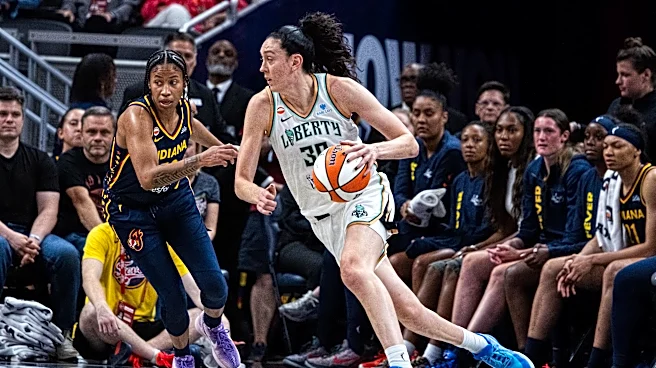
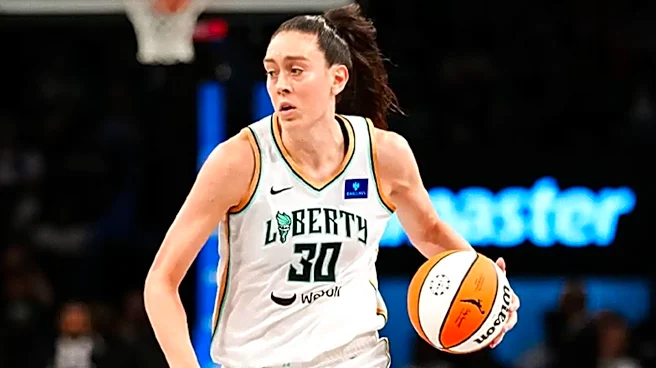
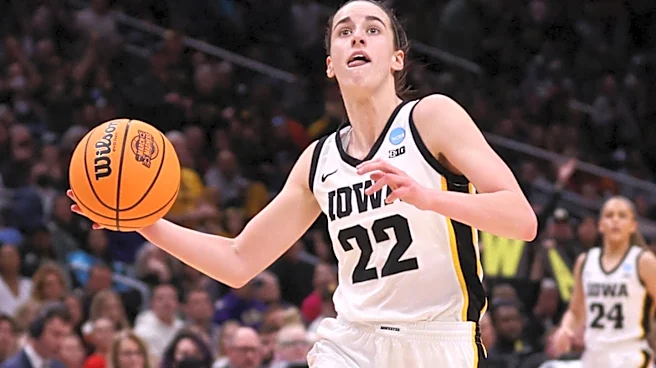
During a recent WNBA game between the Indiana Fever and the New York Liberty, Caitlin Clark of the Fever was involved in a controversial play that resulted in her receiving a technical foul. The incident occurred when Clark collided with Jonquel Jones
of the Liberty while trailing her opponent. Clark fell to the ground and, visibly upset, demanded a foul call from the referee, which was not granted. Her reaction led to a technical foul being assessed against her. This incident followed a high-scoring performance by Clark in a previous game, where she scored 45 points and made 10 assists. However, in this game, her performance was not as strong, which may have contributed to her frustration. Clark has a history of injury concerns, making her particularly sensitive to physical contact during games.
Why It's Important?
The incident highlights the ongoing challenges athletes face with officiating in professional sports. For Caitlin Clark, a prominent player in the WNBA, the technical foul underscores the emotional and physical demands placed on athletes, especially those with a history of injuries. The decision by the referees not to call a foul and instead penalize Clark for her reaction could influence how players express their frustrations on the court. This situation also brings attention to the consistency of officiating in the league, which can impact the outcome of games and player morale. The broader implications affect team dynamics and the perception of fairness in sports competitions.
What's Next?
The Indiana Fever and Caitlin Clark may seek clarification from the league regarding the officiating standards applied during the game. This could lead to discussions about how referees handle similar situations in the future, potentially prompting changes in how technical fouls are assessed. The team might also focus on supporting Clark to manage her reactions during high-pressure moments, especially given her injury history. Fans and analysts will likely continue to debate the incident, which could influence public perception of the league's officiating quality.