










What's Happening?
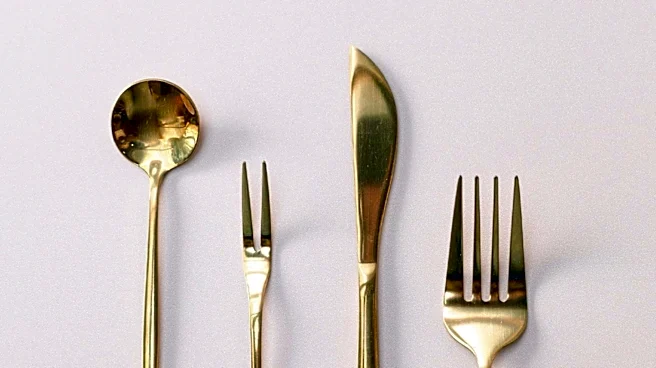
Dung Ngo, a design writer and collector, has amassed a collection of over 10,000 pieces of cutlery, which has inspired his new book 'Knife Fork Spoon: Modernist Cutlery 1900–2025'. The book, along with an exhibition at the Denver Art Museum, explores
125 years of flatware design. Ngo highlights the stagnation in cutlery design and the decline of traditional manufacturing, particularly in places like Solingen, Germany, and Sheffield, England. To address this, Ngo has collaborated with international artists to create innovative cutlery designs using 3D printing technology. This approach allows for personalized and culturally diverse designs, as showcased in the exhibition 'Knife, Fork, Spoon 3.0' in Copenhagen.
Why It's Important?
The integration of 3D printing in cutlery design represents a significant shift in manufacturing and accessibility. This technology allows for the creation of custom designs tailored to individual needs, such as those with limited hand dexterity or for children. It democratizes design by making it possible to produce unique pieces without the high costs associated with traditional manufacturing. This evolution could lead to broader access to well-designed products, impacting both consumers and designers. As 3D printing becomes more widespread, it could transform industries by reducing production costs and enabling local manufacturing.
What's Next?
As 3D printing technology becomes more accessible, it is expected that more designers will experiment with creating personalized and culturally relevant cutlery. This could lead to a resurgence in interest in flatware design and potentially revive interest in other areas of product design. The technology's ability to produce custom pieces on demand may also encourage more sustainable practices by reducing waste and overproduction. Additionally, as the cost of 3D printing metal decreases, it could become a standard tool in the design industry, further expanding the possibilities for innovation.
Beyond the Headlines
The shift towards 3D printing in cutlery design also raises questions about the future role of designers. While technology can facilitate new forms of creativity, the human element in design remains crucial. Designers will continue to play a vital role in making aesthetic and functional decisions, ensuring that technology serves as a tool rather than a replacement. This development also highlights the importance of preserving cultural heritage in design, as seen in the diverse cultural influences in the new cutlery designs.