






What's Happening?
Consumers often find it challenging to determine the true value of their jewelry, especially pieces containing gold and diamonds. The monetary worth of jewelry is not solely dependent on its age, appearance, or sentimental value. For gold, a key factor
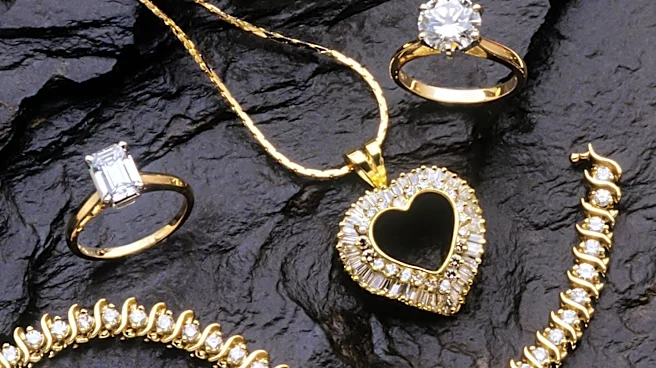
is its karat purity, which indicates the proportion of pure gold present. Pure gold is 24 karats (24K), meaning it is 99.9% pure. Common jewelry karats include 10K, 14K, and 18K, with the number representing parts of pure gold out of 24. For instance, 14K gold is 14 parts gold and 10 parts other metals, making it approximately 58.3% pure. These other metals, or alloys, are added to enhance durability, alter color, and improve workability, as pure gold is very soft. Markings like 'GP' or 'GF' indicate gold plating or gold-filled jewelry, which are distinct from solid gold and have different values. For diamonds, the '4Cs'—cut, color, clarity, and carat weight—are primary valuation factors. However, two diamonds with the same carat weight can have vastly different values based on these other characteristics. Age can contribute to value if a piece has historical significance or represents a desirable period, but it does not automatically confer high monetary worth. Experts recommend having jewelry evaluated by a professional jeweler to accurately assess its value before selling.
Why It's Important?
Understanding gold karat and purity is crucial for consumers to make informed decisions when buying or selling jewelry. Misconceptions about purity can lead to overpaying for items or underselling valuable pieces. For instance, a heavy 10K bracelet might contain more total pure gold than a light 18K pendant, highlighting that karat alone doesn't determine melt value; weight is also essential. The durability of gold jewelry is directly linked to its karat; lower karat gold, with more alloys, is generally more durable for everyday wear than 24K gold. This knowledge helps consumers choose jewelry that suits their lifestyle and budget. Furthermore, distinguishing between solid gold, gold-filled, and gold-plated items is vital, as their intrinsic value differs significantly. For sellers, a professional evaluation ensures they receive a fair offer based on the actual precious metal content, craftsmanship, and potential collector value, rather than just appearance or sentimental attachment. This transparency protects both buyers and sellers in the jewelry market.
What's Next?
Consumers considering selling or purchasing jewelry should prioritize professional evaluation. Jewelers can perform tests, such as acid testing or X-ray fluorescence analysis, to verify gold purity and assess diamond characteristics. This process helps to avoid reliance on potentially misleading stamps or appearances. For those looking to invest in gold, understanding the difference between jewelry and bullion is important; bullion buyers typically seek 24K gold for its highest purity. The jewelry market will continue to see consumers needing guidance on valuation, especially with vintage or inherited pieces where value is not immediately obvious. Educational efforts from jewelers and consumer protection agencies can help demystify the complexities of jewelry valuation, empowering individuals to make more informed financial decisions regarding their precious items. As market prices for gold and diamonds fluctuate, regular re-evaluation of significant pieces may also be beneficial.
Beyond the Headlines
The intricacies of jewelry valuation extend beyond simple material worth, touching upon cultural, historical, and ethical dimensions. The concept of 'karat' itself reflects a historical system of measurement that has evolved to accommodate both the aesthetic and practical demands of jewelry making. The addition of alloys to pure gold, while reducing its 'purity,' enhances its utility and allows for a wider range of designs and colors, such as white and rose gold. This blending of materials highlights a balance between intrinsic value and functional artistry. Moreover, the market for antique and vintage jewelry often involves a premium for craftsmanship, rarity, and historical provenance, which can sometimes outweigh the melt value of the precious metals. This underscores the idea that value is not purely material but also encompasses human creativity and cultural significance. Ethical considerations, such as the sourcing of gold and diamonds, also play an increasingly important role for conscious consumers, influencing perceptions of value beyond the '4Cs' or karat stamp.