
What's Happening?
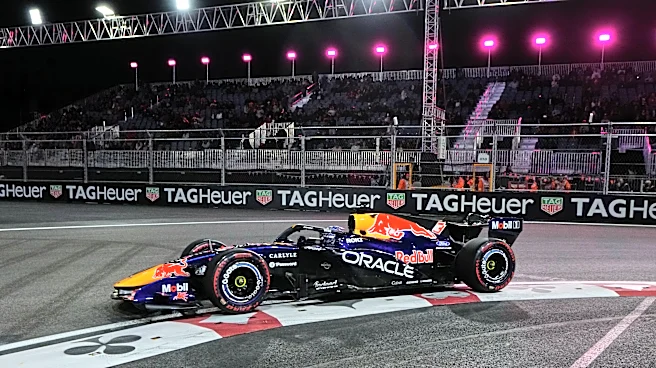
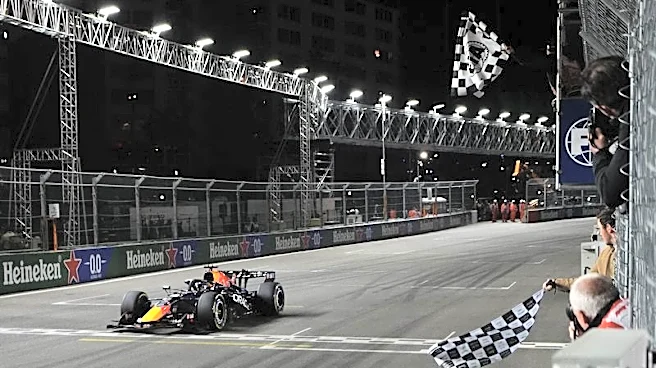
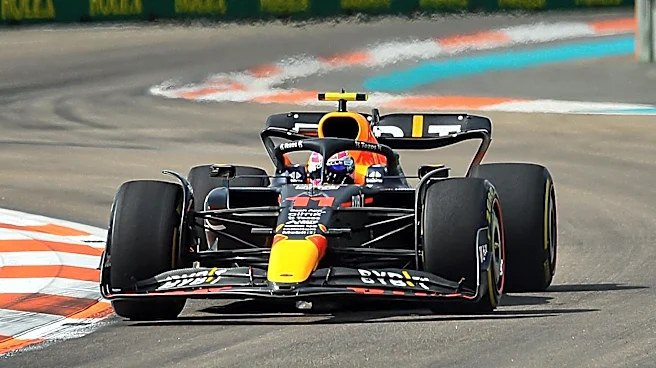
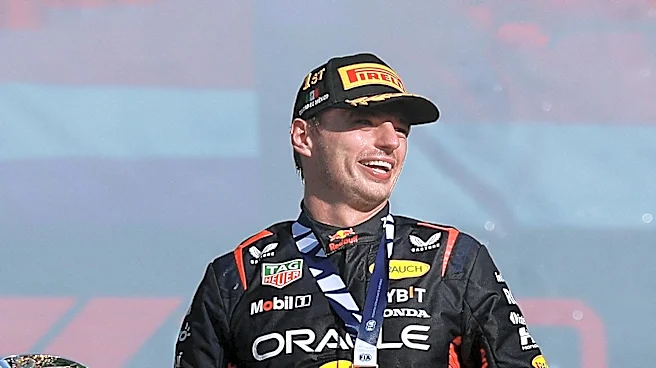
Red Bull Racing achieved victory at the Las Vegas Grand Prix despite not having the fastest car on pure pace. The team, in conjunction with driver Max Verstappen, implemented a unique and daring strategy
focusing on specific sections of the track rather than overall top speed. Data analysis revealed that Verstappen's fastest lap was significantly slower than several competitors, and his average top speed ranked 15th among drivers. Red Bull deliberately configured their car to prioritize energy boost deployment on the section leading to the finish line, accepting that they would be overtaken on the longer Strip straight. This setup required Verstappen to execute challenging overtakes on a kinked straight and off the racing line, a task he successfully managed. The team's preparation and Verstappen's driving skill were crucial in overcoming the car's comparative lack of raw speed, leading to a strategic win.
Why It's Important?
This victory highlights the critical role of strategic innovation and driver skill in competitive motorsports, even when a team may not possess the absolute fastest machinery. For Red Bull Racing, it reinforces their reputation for tactical prowess and their ability to extract maximum performance under varied conditions. The outcome demonstrates that success in Formula One is not solely dependent on raw power but also on meticulous planning, understanding track dynamics, and leveraging driver capabilities. This approach could influence future race strategies across the sport, encouraging other teams to explore unconventional setups and rely more heavily on driver adaptability. It also underscores the competitive nature of Formula One, where marginal gains through strategy can lead to significant results, impacting team standings and championship battles.
What's Next?
Following this strategic victory, other Formula One teams will likely analyze Red Bull's data and approach from the Las Vegas Grand Prix. Competitors may attempt to replicate or adapt similar unconventional strategies for future races, especially on circuits with unique characteristics. This could lead to a more diverse range of car setups and race tactics across the grid, potentially increasing the unpredictability and excitement of upcoming events. Red Bull Racing will aim to build on this success, continuing to refine their strategic planning and car development. The team's ability to win without the fastest car could also influence their long-term development priorities, potentially emphasizing strategic flexibility and driver-centric car characteristics.
Beyond the Headlines
The Las Vegas Grand Prix outcome transcends a simple race win, offering insights into the evolving dynamics of high-performance sports. It underscores the concept that 'smart' can sometimes outperform 'fast' in highly competitive environments. This strategic triumph could inspire a re-evaluation of traditional performance metrics in motorsports, shifting focus from pure speed to a more holistic view that includes adaptability, energy management, and driver execution under pressure. Ethically, it raises questions about the balance between technological advancement and human skill in determining race outcomes. Culturally, it reinforces the narrative of the underdog or the strategically superior overcoming raw power, a theme that resonates broadly beyond sports. This event may also influence how sponsors and investors view team capabilities, potentially valuing strategic depth as much as raw engineering power.