







What's Happening?
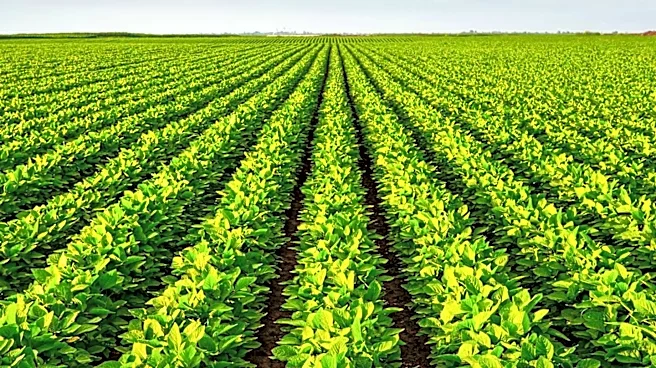
Sumitomo Chemical has introduced TopGrain, a new biological crop input, to the Brazilian agricultural market. This product is designed to enhance the resilience of soybean and corn crops against adverse weather conditions while simultaneously improving
grain filling and overall yield performance. TopGrain, which is based on abscisic acid, acts as a complementary tool within existing crop management strategies, aiming to support plants during critical developmental stages. The company projects that TopGrain can deliver yield increases of up to 161 pounds per acre for soybeans and up to 375 pounds per acre for corn. These figures represent an approximate 5% improvement based on average Brazilian yields from the 2025/26 season. Sumitomo Chemical initially launched TopGrain in the United States, India, and Brazil, with plans to expand its application to other crops such as sugarcane, cotton, and various fruits.
Why It's Important?
The introduction of TopGrain signifies a broader shift in agricultural inputs towards technologies that prioritize efficiency and crop resilience, rather than solely focusing on traditional crop protection. For Brazilian soybean and corn producers, who operate on a massive commercial scale, even modest yield improvements can significantly impact farm economics. The increasing volatility of weather patterns makes crop resilience a crucial factor alongside conventional pest, insect, and weed management. By offering a product that helps crops maintain productivity under environmental stress, Sumitomo Chemical is addressing a growing need for sustainable and efficient farming practices. This move also reflects Sumitomo Chemical's ambition to double its Brazilian agricultural operations by 2030, with biological inputs playing a key role in this expansion strategy.
What's Next?
The commercial success of TopGrain in Brazil will depend on its ability to consistently deliver the promised yield gains and translate into stronger returns for farmers across diverse regions, seasons, and growing conditions. If the technology proves economically viable and reliable, Sumitomo Chemical intends to leverage its Brazilian launch as a foundation for a wider expansion of biological crop inputs into other major agricultural markets. The company also plans to adapt TopGrain for use in additional crops, including sugarcane, cotton, and various fruits, as it develops the technology for different production systems and crop requirements. This expansion could further solidify the role of biological inputs in global agriculture.
Beyond the Headlines
The development and deployment of biological crop inputs like TopGrain highlight a growing trend in agriculture towards more sustainable and integrated crop management systems. This approach moves beyond simply adding layers of protection to focusing on enhancing the plant's inherent ability to withstand stress and utilize existing inputs more efficiently. The emphasis on abscisic acid, a naturally occurring plant hormone, underscores a shift towards bio-based solutions that work in harmony with plant physiology. This could lead to reduced reliance on synthetic chemicals over time, fostering healthier ecosystems and potentially mitigating environmental impacts associated with conventional farming. The economic viability of such products will be crucial for widespread adoption, as farmers weigh the initial investment against potential yield increases and long-term sustainability benefits.