




What's Happening?
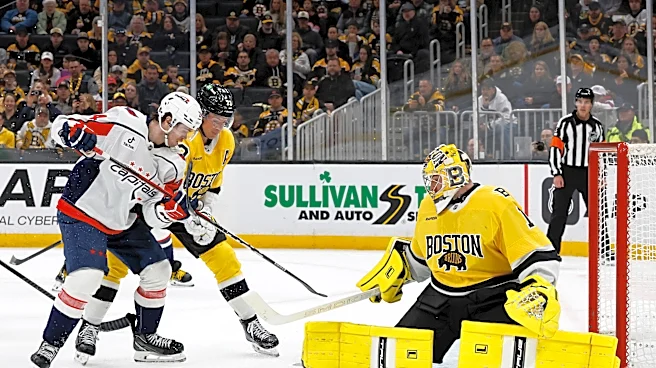
Jeremy Jacobs, owner of the Boston Bruins, has stepped down as chairman of the National Hockey League's (NHL) Board of Governors after nearly two decades in the role. Jacobs, who acquired the Bruins in 1975, was first elected chairman in 2007. During
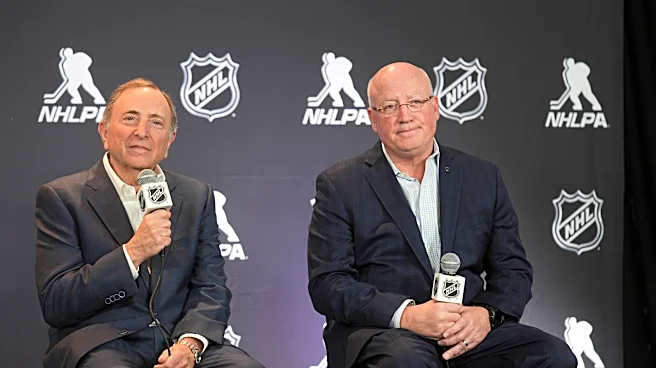
his tenure, the NHL experienced significant growth, including landmark media rights deals, expansion into new North American geographies, and increased global presence. He also oversaw the ratification of a new collective bargaining agreement set to run through September 15, 2030. Ted Leonsis, Governor of the Washington Capitals and chairman of Monumental Sports and Entertainment, has been unanimously elected as Jacobs' successor. Calgary Flames Governor Murray Edwards will assume the role of vice-chair of the Board. Jacobs expressed pride in the accomplishments during his leadership, emphasizing the league's focus on player safety and fan accessibility.
Why It's Important?
This leadership transition marks a significant moment for the NHL, as Jeremy Jacobs has been a pivotal figure in the league's governance for an extended period. His departure signifies the end of an era characterized by substantial growth and stability, including navigating challenging labor disputes and overseeing expansion. The election of Ted Leonsis as the new chairman is crucial for the league's future direction. Leonsis, known for his innovative approach and passion for hockey, is expected to guide the NHL through evolving media landscapes, technological advancements, and continued efforts to expand the sport's reach. This change in leadership could influence strategic decisions regarding league operations, media partnerships, and fan engagement initiatives, potentially shaping the NHL's trajectory for years to come. The continuity provided by Murray Edwards as vice-chair suggests a blend of new vision and experienced guidance for the Board.
What's Next?
Ted Leonsis will now assume the responsibilities of chairman of the NHL Board of Governors, with Murray Edwards serving as vice-chair. Leonsis is expected to chart the course for the future of hockey, building upon the foundation laid by Jacobs. This will likely involve continued focus on innovation, expanding the league's footprint, and enhancing the fan experience. The new leadership will also be responsible for overseeing the implementation and adherence to the recently ratified collective bargaining agreement. Jacobs will remain on the Board of Governors, providing continuity and institutional knowledge. The transition is anticipated to be smooth, given the unanimous election of Leonsis and the established working relationships within the Board. Stakeholders, including team owners, players, and fans, will be observing how the new leadership team addresses current challenges and pursues future opportunities for the league.
Beyond the Headlines
The transition of leadership within the NHL's Board of Governors extends beyond mere administrative change; it reflects the evolving dynamics of professional sports ownership and governance. Jeremy Jacobs' nearly two-decade tenure highlights the long-term commitment and influence that seasoned owners can wield in shaping a league's identity and business model. His success in achieving "unprecedented growth" and navigating complex labor relations underscores the blend of business acumen and diplomatic skill required at this level. The selection of Ted Leonsis, known for his forward-thinking approach, signals a potential shift towards embracing new technologies and digital strategies more aggressively. This move could set a precedent for other major sports leagues, emphasizing the importance of leadership that is not only experienced but also adaptable to rapid changes in media consumption and fan engagement. The legacy of Jacobs and the future vision of Leonsis collectively illustrate the continuous evolution of sports as both entertainment and a significant economic enterprise.