



What's Happening?
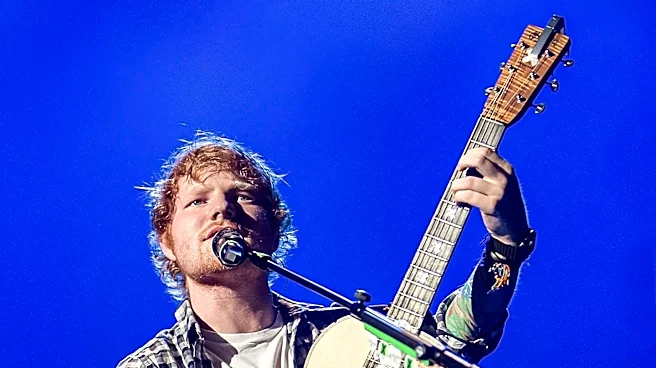
Ed Sheeran has announced new opening acts for the remaining dates of his U.S. Loop Tour. Isaac Slade, a Vashon Island resident and former lead singer of The Fray, and American Idol alum Brooks Rosser will join Sheeran. Rosser confirmed his excitement
on Instagram, with his first performance scheduled at Lucas Oil Stadium in Indianapolis, marking his return to the stage since American Idol. Slade has already performed in Atlanta and is slated for several more stadium dates. The change in opening acts follows a public dispute earlier in the tour. Macklemore, who had performed only two shows, was removed after making comments in support of Palestinians. Macklemore stated that some stadium owners threatened to bar the tour if he remained, a decision Sheeran attributed to external pressures. Subsequently, other supporting artists, including Finneas, Lukas Graham, Aaron Rowe, and Beoga, withdrew from the tour in solidarity, leaving Sheeran without openers for some shows. The U.S. leg of the tour will conclude on November 7 in Tampa, Florida, after which it will proceed to Latin America. Sheeran's two Hollywood, Florida, shows on October 29 and 30 are casino dates and will not feature opening acts.
Why It's Important?
This development is significant for the music industry and concert touring, highlighting the complex interplay between artist expression, venue policies, and tour logistics. The removal of Macklemore due to his political statements and the subsequent withdrawal of other artists underscore the increasing sensitivity surrounding social and political issues in entertainment. This situation can impact artists' willingness to express their views publicly, potentially leading to self-censorship or, conversely, galvanizing artists to take stronger stances. For tour organizers and venues, it emphasizes the need to navigate potential controversies that could disrupt schedules and financial commitments. The swift replacement of opening acts demonstrates the resilience and adaptability required in large-scale concert productions, but also reveals the underlying pressures that can influence artistic lineups. Fans are directly affected by these changes, as the concert experience can be altered by shifts in supporting acts and the broader atmosphere surrounding a tour. The incident also brings into focus the power dynamics between artists, venues, and promoters, particularly when political statements intersect with commercial interests.
What's Next?
The U.S. leg of Ed Sheeran's Loop Tour will continue with the newly announced opening acts, Isaac Slade and Brooks Rosser, until its conclusion on November 7 in Tampa. Following the U.S. dates, the tour is scheduled to move to Latin America. The incident involving Macklemore and the subsequent artist withdrawals may prompt further discussions within the music industry regarding contractual obligations, freedom of speech for performers, and the role of venues in managing political expressions during events. Artists and their management teams might re-evaluate their strategies for addressing sensitive topics or for selecting tour partners to mitigate similar disruptions in the future. For fans, the focus will shift to the performances of the new openers and the overall success of the remaining tour dates. The broader implications for artist activism and venue policies in the entertainment sector will likely continue to unfold as similar situations arise.
Beyond the Headlines
The controversy surrounding Ed Sheeran's Loop Tour extends beyond mere logistical changes, touching upon fundamental questions of artistic freedom and corporate responsibility in the entertainment sector. The pressure exerted by stadium owners to remove Macklemore due to his political statements highlights a growing trend where venues and sponsors may seek to control the narrative or avoid controversy, potentially stifling artists' ability to use their platforms for social commentary. This raises ethical concerns about censorship and the commercialization of artistic expression. The solidarity shown by other artists who withdrew from the tour underscores a collective desire among some performers to support their peers and stand by principles, even at the cost of professional opportunities. This incident could contribute to a broader re-evaluation of contracts between artists, promoters, and venues, potentially leading to clauses that protect or restrict political expression. It also reflects the polarized social and political climate, where even entertainment events can become battlegrounds for ideological differences, forcing artists and industry stakeholders to navigate increasingly complex ethical landscapes.