




What's Happening?
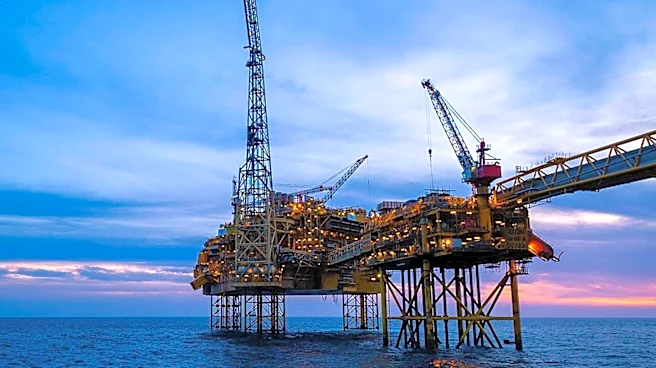
Repsol has reported a significant increase in oil and gas production, reaching its highest level in two years. The company's first-half upstream earnings showed a 6.7% increase in adjusted net income compared to the previous year. This growth is attributed
to new production from Alaska's Pikka development and ongoing progress in global exploration and production projects. In Alaska, the Pikka development began production in May, with output expected to rise significantly in the coming months. Repsol is also advancing its Raia natural gas project in Brazil and has secured new exploration blocks in Libya. The company has maintained stable production in Venezuela and signed agreements to expand natural gas and oil production.
Why It's Important?
Repsol's increased production and strategic advancements in key regions highlight its commitment to expanding its global footprint in the energy sector. The company's focus on strategic upstream projects is expected to support continued production growth, which is crucial for meeting global energy demands amid geopolitical tensions. The developments in Alaska, Brazil, and Libya are particularly significant as they represent potential long-term revenue streams and strengthen Repsol's position in the global energy market. The company's ability to maintain stable production in Venezuela, despite political and economic challenges, further underscores its operational resilience.
What's Next?
Repsol plans to continue its focus on strategic upstream projects to support production growth. The company expects its net production to average between 560,000 and 570,000 boed for the full year of 2026. As Repsol advances its projects in Alaska, Brazil, and Libya, stakeholders will be monitoring the company's ability to meet production targets and navigate geopolitical challenges. The successful execution of these projects could enhance Repsol's competitive position and influence future investment decisions in the energy sector.