


What's Happening?
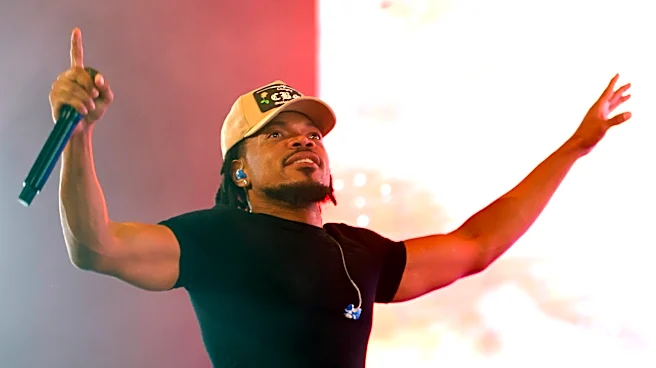
A Cook County judge has sided with Chicago-born artist Chance the Rapper, whose real name is Chancelor Bennett, in a protracted legal dispute against his former manager, Pat Corcoran. The legal battle, which spanned nearly six years, involved various
business disagreements between the two parties. On Tuesday, Judge James Hanlon concluded the case by ruling that Corcoran had violated his fiduciary obligations to Bennett. This decision could result in a payout of over $1.5 million to the artist, according to his representatives. The ruling brings an end to a long-standing and bitter feud that has been a significant part of Bennett's professional life.
Why It's Important?
This ruling is significant for the music industry, particularly concerning artist-manager relationships and fiduciary responsibilities. It underscores the legal obligations managers have to their clients and sets a precedent for how such disputes can be resolved in court. For artists, it highlights the importance of clear contractual agreements and the potential for legal recourse when those agreements or implied duties are breached. The substantial financial payout also emphasizes the monetary value at stake in these relationships. This case could encourage other artists to scrutinize their management contracts more closely and empower them to pursue legal action if they believe their managers have not acted in their best interests. Conversely, it may prompt managers to be more diligent in fulfilling their duties to avoid similar legal challenges and financial penalties.
What's Next?
Following the judge's ruling, the immediate next step will likely involve the determination and execution of the exact financial payout to Chance the Rapper, which his representatives estimate could exceed $1.5 million. Corcoran may explore options for appeal, though the source does not specify if an appeal is planned. This case could also lead to increased scrutiny of artist-manager contracts across the music industry, potentially prompting a review of standard practices and legal clauses to better protect both parties. Other artists and managers might look to this case as a reference point for their own agreements and disputes. The resolution of this long-standing legal battle allows Chance the Rapper to move forward without the burden of this ongoing litigation.
Beyond the Headlines
Beyond the immediate financial and legal implications, this case touches upon the broader dynamics of power and trust within the entertainment industry. The concept of fiduciary duty, which was central to the judge's decision, highlights the ethical and professional responsibilities that come with managing an artist's career and finances. The six-year duration of the dispute also illustrates the emotional and financial toll that such legal battles can take on individuals, regardless of the outcome. This ruling could contribute to a cultural shift where artists are more empowered to challenge perceived injustices by their management, fostering greater transparency and accountability in the industry. It also serves as a reminder of the complex interplay between creative endeavors and the business structures that support them.