
What's Happening?
During the U.S. Thanksgiving holiday, while Wall Street exchanges were closed, gold, oil, and Bitcoin markets remained active. Gold, traditionally considered a safe-haven asset, experienced a significant
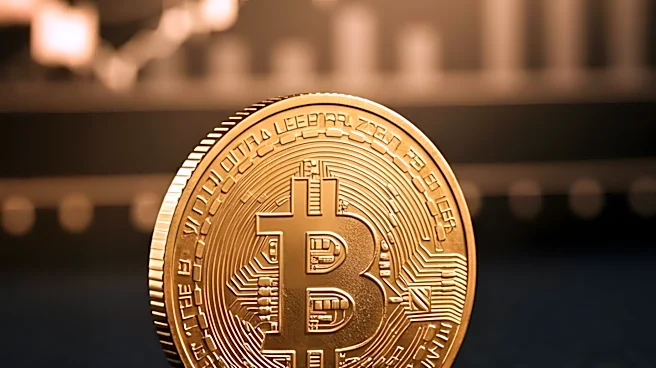
drop, with its spot price briefly falling below $3,500 an ounce, marking its lowest level in over a year. This decline, which saw gold down approximately 12% in November, is attributed partly to strong U.S. economic data, including a 3.3% rise in core PCE inflation and a revised 4.3% GDP growth in the third quarter. These figures support expectations for a Federal Reserve rate hike in December, which typically negatively impacts gold as bonds become more attractive. Bitcoin, conversely, saw a rebound, trading at $60,820, up 3.2% over 24 hours. This bounce was largely driven by short sellers closing bearish leveraged bets, forcing them to buy back Bitcoin and push prices higher. Silver also took a hit, dropping below $39 an ounce before recovering slightly.
Why It's Important?
The divergent movements in gold and Bitcoin during a U.S. holiday highlight shifting investor perceptions of 'safe' assets and the increasing influence of cryptocurrency markets. Gold's decline, despite its historical role as a hedge against uncertainty, suggests that strong U.S. economic indicators and anticipated monetary policy tightening by the Federal Reserve are outweighing traditional safe-haven demand. This could indicate a broader re-evaluation of asset classes by investors in response to macroeconomic conditions. The volatility in Bitcoin, influenced by short squeezes, underscores the speculative nature of the cryptocurrency market and its susceptibility to rapid price swings. The continuous trading of Bitcoin, gold, and oil futures during U.S. holidays means that significant market movements can occur outside of traditional U.S. trading hours, impacting U.S. investors when markets reopen. This scenario also sets the stage for potential arguments among investors regarding the true safety and stability of various assets.
What's Next?
The immediate aftermath of the Thanksgiving holiday will see several key events that could further influence these markets. On Friday, approximately $6.8 billion in Bitcoin options are set to expire on Deribit, which could lead to significant price swings. U.S. stock exchanges will reopen for a half-day, providing the first opportunity for ETF holders to react to any cryptocurrency developments from Thursday. Looking ahead, OPEC+ ministers are scheduled to meet on Sunday to determine oil production policy for 2027, which will impact oil prices. Furthermore, the Federal Reserve is widely expected to raise interest rates on December 9, a decision that will likely continue to affect gold's appeal and potentially other asset classes. These upcoming events suggest continued volatility and strategic adjustments for investors in gold, oil, and Bitcoin.
Beyond the Headlines
The market dynamics observed during the U.S. Thanksgiving holiday reveal deeper trends in global finance. The weakening of gold's traditional safe-haven status in the face of strong economic data and anticipated rate hikes challenges long-held investment strategies. This shift could lead to a re-allocation of capital towards assets perceived to offer better returns in a rising interest rate environment, potentially benefiting other sectors or even alternative investments. The continuous, 24/7 nature of cryptocurrency trading, in contrast to traditional markets, highlights a growing divergence in market structures and accessibility. This constant activity means that U.S. investors are increasingly exposed to global market forces even when their domestic exchanges are closed, necessitating a more vigilant and integrated approach to portfolio management. The ongoing debate about which assets are truly 'safe' reflects a broader uncertainty in the global economic landscape and the evolving role of different asset classes in investor portfolios.