






What's Happening?
MP Materials Corp. (NYSE: MP) announced robust financial and operational results for the third quarter of 2026, surpassing analyst expectations. The company reported a net loss of $20.7 million, or $0.12 per share, a significant improvement from the $41.8
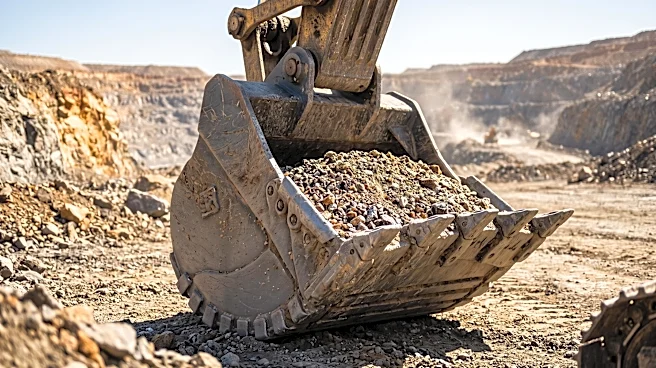
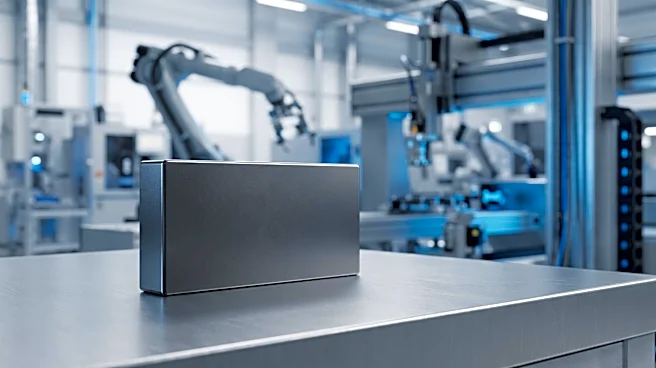
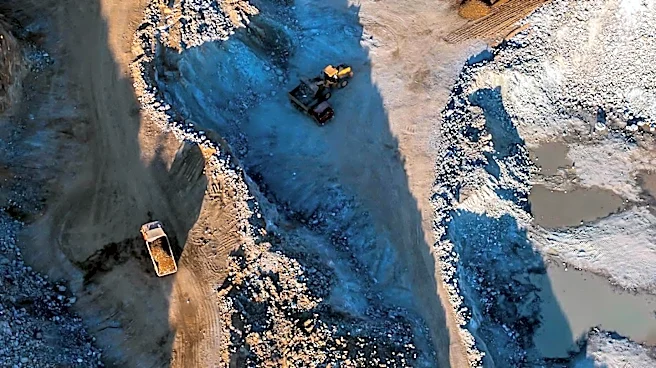
million loss, or $0.24 per share, in the same period last year. Excluding one-time items, MP Materials achieved an adjusted profit of $0.04 per share, outperforming the anticipated loss of $0.02 per share. Revenue nearly tripled to $147.6 million, driven by increased sales of Neodymium-Praseodymium (NdPr) oxide and metal, stronger market pricing, and a $31.6 million sale of SEG+ to a U.S. aerospace and defense customer. A key factor in these positive results was $8.1 million in price protection income from the U.S. government, part of an agreement designed to reduce reliance on foreign rare earth supplies. The company also highlighted the completion of its General Motors magnet qualification process, with saleable magnet deliveries and revenue commencing in the fourth quarter of 2026. MP Materials operates the Mountain Pass rare earth mine in California and a magnet manufacturing facility in Texas, positioning it as a fully integrated rare earth producer in the U.S.
Why It's Important?
These results are significant as MP Materials is America’s only fully integrated rare earth producer, playing a crucial role in national security and economic independence. The company's strong performance, particularly the increased revenue and adjusted profit, underscores the growing demand for rare earth materials essential for electric vehicles, wind turbines, robotics, and defense systems. The U.S. government's financial support, totaling nearly $120 million in price protection income since last year, highlights a strategic effort to secure a domestic supply chain for these critical minerals, reducing dependence on China, which currently dominates the global market. The successful qualification with General Motors marks a pivotal moment, signaling MP Materials' capability to supply high-strength permanent magnets to major U.S. industries. This vertical integration from mining to magnet manufacturing strengthens the U.S. position in advanced technology sectors and mitigates supply chain risks, fostering greater resilience in critical industries.
What's Next?
Following the successful third quarter, MP Materials anticipates further growth with saleable magnet deliveries and revenue from its General Motors qualification commencing in the fourth quarter of 2026. The company will continue to focus on expanding its magnet manufacturing capabilities at its Independence facility in Texas and developing its 10X facility. Investors will closely monitor updates on these projects, as well as any new commercial magnet agreements beyond its defense contracts. The ongoing geopolitical landscape, particularly regarding China's rare-earth export policies, will also influence market dynamics and the strategic importance of MP Materials. The company's ability to secure additional commercial partnerships with automakers, electronics firms, and energy companies will be crucial for its long-term growth and diversification beyond government contracts. Continued government support and policy decisions aimed at strengthening domestic critical mineral supply chains will also play a significant role in MP Materials' future trajectory.
Beyond the Headlines
The strong performance of MP Materials extends beyond typical financial metrics, touching upon critical themes of national security, technological sovereignty, and environmental responsibility. The U.S. government's investment and price protection agreement with MP Materials reflect a broader strategic imperative to de-risk supply chains for essential materials that power modern defense systems and green technologies. This initiative aims to counter geopolitical vulnerabilities associated with concentrated global supply, particularly from China. Furthermore, MP Materials' commitment to vertical integration, from mining to magnet production, addresses not only economic but also environmental concerns by bringing chemically intensive processing onshore under stricter U.S. regulations. This could set a precedent for other critical mineral supply chains, fostering a more sustainable and secure industrial base. The company's success could also stimulate further investment in domestic mining and processing capabilities, creating jobs and fostering innovation in advanced materials science within the United States.