








What's Happening?
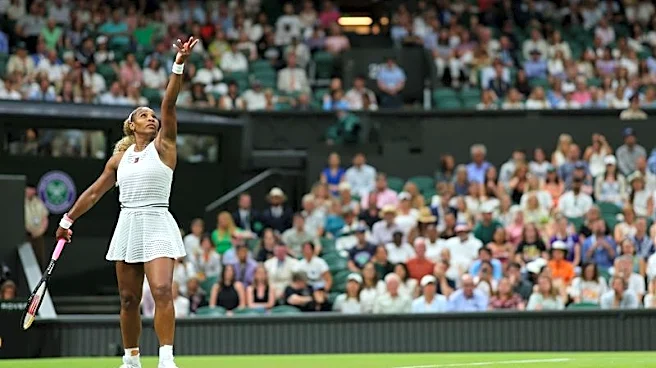
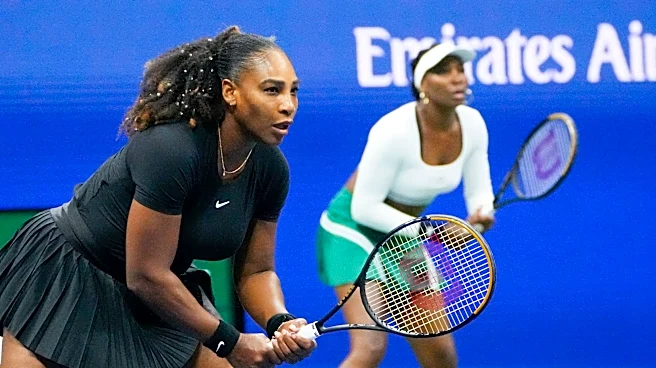
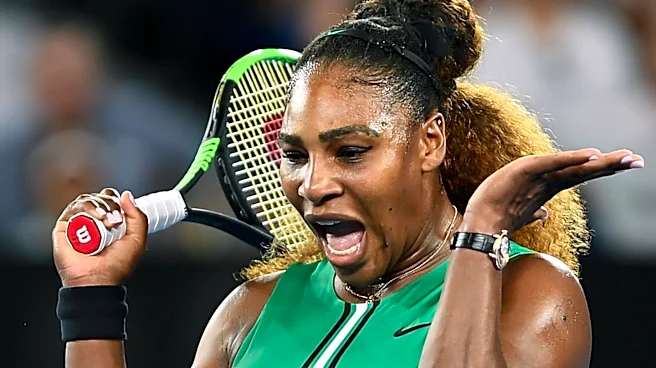
Serena Williams made a significant return to Wimbledon, marking her first singles match in nearly four years. Facing Maya Joint, a 20-year-old Australian, Williams entered the court under immense pressure, both from her legacy as a 23-time Grand Slam
champion and her current physical challenges, including a knee injury. Despite losing the match, Williams demonstrated a key moment of emotional intelligence by taking a deep breath during the second set, which helped her push the set to a tiebreak and win it. This act of self-management under pressure was noted by her coach, Rennae Stubbs, as a pivotal moment in the match.
Why It's Important?
Williams' return to Wimbledon and her demonstration of emotional intelligence underscore the importance of mental resilience in high-pressure situations. Her ability to manage stress through techniques like deep breathing highlights a valuable skill for professionals across various fields. Emotional intelligence, which includes self-awareness and self-management, is crucial for maintaining performance under stress. Williams' experience serves as a reminder of the power of mindfulness and structured breathing in managing emotions and improving focus, which can be beneficial in both sports and professional environments.
What's Next?
While Williams did not win the match, her performance and emotional management suggest she may continue to compete, potentially inspiring others to adopt similar techniques for stress management. Her approach could influence training methods for athletes and professionals, emphasizing the integration of emotional intelligence practices. As Williams navigates her career post-Wimbledon, her strategies for handling pressure may become a model for others facing similar challenges.
Beyond the Headlines
Williams' use of emotional intelligence in a high-stakes match highlights broader cultural shifts towards valuing mental health and emotional skills in sports. This development reflects a growing recognition of the psychological aspects of performance, encouraging athletes to prioritize mental well-being alongside physical training. The emphasis on emotional intelligence could lead to more comprehensive support systems for athletes, promoting long-term career sustainability and personal growth.