


What's Happening?
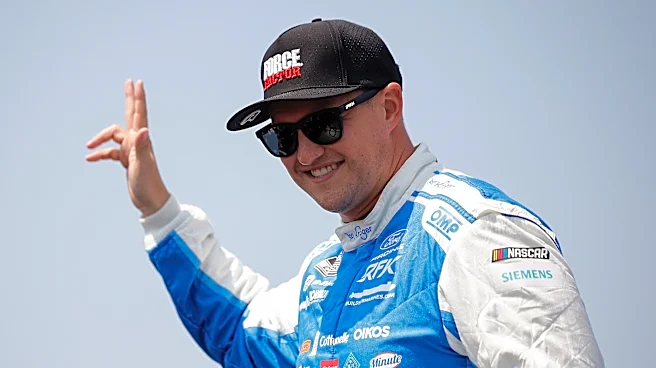
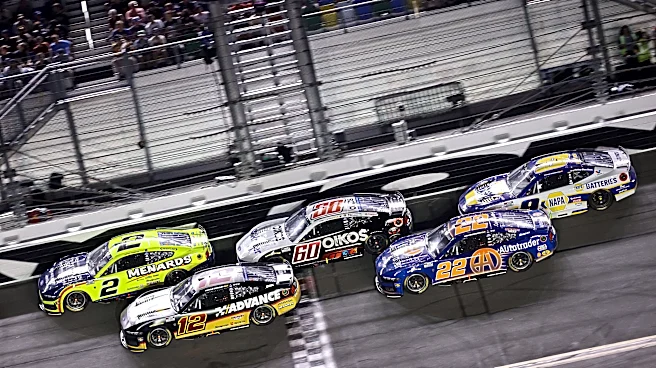
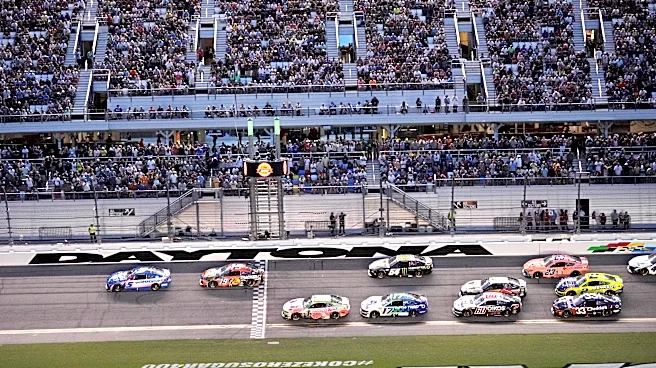
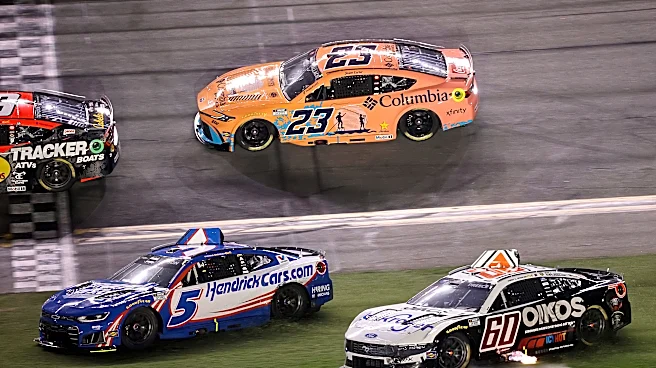
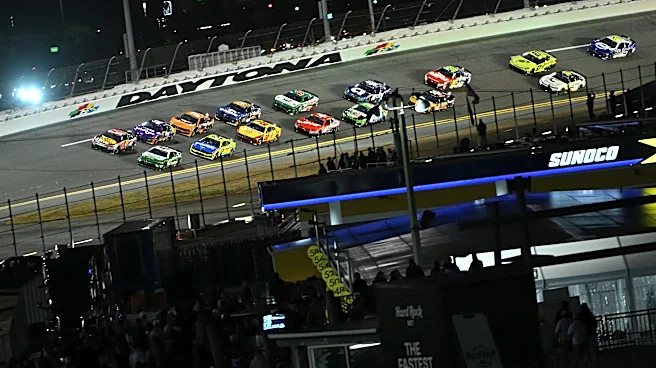
NASCAR driver Christopher Bell expressed strong criticism regarding the new Daytona package implemented for the Coke Zero Sugar 400. Bell, who finished 17th in the race, stated that the updated package, which features lower horsepower and reduced downforce,
performed worse than anticipated. He noted that the changes did not create the intended separation among cars and led to increased fuel-saving issues. Bell conveyed his disappointment, indicating that the racing dynamics remained largely unchanged despite NASCAR's efforts to revamp the rules to break up gridlock often seen at superspeedways. The sanctioning body had hoped to generate larger gaps and allow drivers to build more runs, but Bell found the cars drove "the exact same," making the outcome "very, very perplexing." This contrasts with other drivers, such as Chase Elliott, who found merits in the new package, enabling him to advance significantly during the race.
Why It's Important?
This criticism from a prominent driver like Christopher Bell is important because it highlights potential issues with NASCAR's ongoing efforts to enhance race competitiveness and driver experience. The introduction of new packages is a significant investment aimed at improving the spectacle for fans and providing more opportunities for drivers to showcase their skills. If key drivers find these changes to be ineffective or even detrimental, it could lead to a reevaluation of future aerodynamic and engine specifications. The goal of creating more dynamic racing, with greater separation and passing opportunities, is central to NASCAR's appeal. Bell's comments suggest that the current modifications might not be achieving this, potentially impacting fan engagement and the overall perception of the sport's evolution. Furthermore, it underscores the challenge NASCAR faces in balancing performance, safety, and entertainment value across its diverse track types.
What's Next?
NASCAR will likely continue to monitor driver feedback and race performance data from events utilizing the new Daytona package. While some drivers, like Chase Elliott, found positive aspects, Bell's strong critique suggests that further adjustments or clarifications might be necessary. The racing body may engage in discussions with teams and drivers to understand the specific challenges and unintended consequences of the current setup. Future races at superspeedways will serve as additional testing grounds to assess the package's long-term viability and impact on competition. Depending on continued feedback and observed race quality, NASCAR could either fine-tune the existing package, revert to previous specifications, or explore entirely new approaches to achieve its objectives for superspeedway racing. The ongoing dialogue between drivers, teams, and the sanctioning body will be crucial in determining the next steps for rule modifications.
Beyond the Headlines
The debate over NASCAR's new Daytona package extends beyond immediate race results, touching upon the fundamental philosophy of stock car racing. The tension between maintaining competitive parity and allowing for individual driver skill to shine is a constant challenge. Bell's remarks about the lack of 'holes' or 'bubbles' to separate cars suggest that the package might be inadvertently promoting a more homogenized racing style, where strategic fuel saving and pack racing dominate over individual maneuvers. This could have long-term implications for driver development, team strategies, and the overall narrative of the sport. If drivers feel constrained by the technical regulations, it could stifle innovation and lead to a perception of artificial competition. The balance between technological advancement and preserving the raw, unpredictable nature of racing is a delicate one, and this situation highlights the ongoing struggle to find that equilibrium.