






What's Happening?
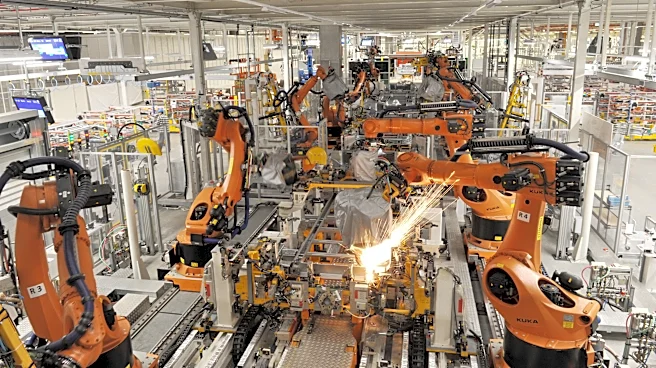
A recent report from S&P Global has revealed that U.S. factory job cuts have reached levels comparable to those seen during the early COVID-19 pandemic and the 2008-2009 financial crisis. The S&P Global US Flash PMI report indicates that employment in the manufacturing
sector has declined for the second consecutive month. This downturn is attributed to companies focusing on cost reduction due to high input prices and concerns about future demand. The report highlights that factory job cuts are at their highest since 2009, excluding the pandemic period. Despite these challenges, input cost inflation has shown signs of cooling, partly due to lower energy prices. The report also notes that while the service sector continues to grow, it does so at a subdued pace due to high prices and low consumer confidence.
Why It's Important?
The findings of the S&P Global report are significant as they reflect broader economic challenges facing the U.S. manufacturing sector. The high rate of job cuts suggests underlying issues with cost management and demand sustainability, which could have ripple effects on the economy. Manufacturing is a critical component of the U.S. economy, and sustained job losses in this sector could impact economic growth and consumer spending. Additionally, the report's indication of cooling input cost inflation may provide some relief to manufacturers, potentially stabilizing the sector if energy prices remain low. However, the ongoing supply chain issues and high raw material costs continue to pose risks.
What's Next?
The manufacturing sector may need to adapt to these challenges by exploring cost-effective strategies and diversifying supply chains to mitigate risks. Policymakers might also consider interventions to support the sector, such as incentives for innovation and investment in technology. The trajectory of energy prices will be crucial in determining future cost pressures. Stakeholders, including industry leaders and government officials, will likely monitor these developments closely to assess the need for further action.