

What's Happening?
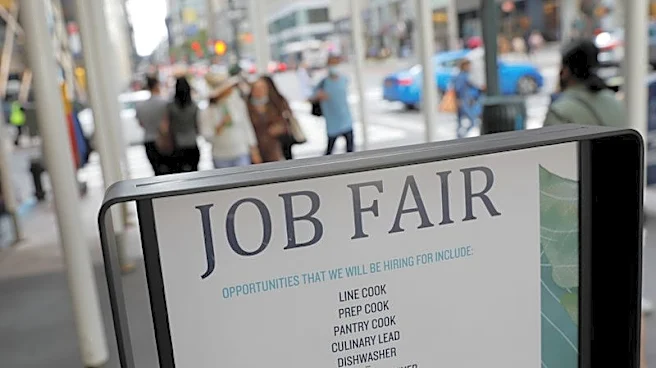
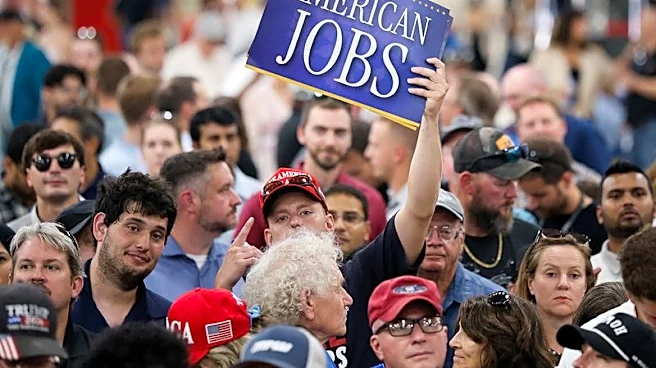
The U.S. economy experienced an unexpected decline in jobs in July, with nonfarm payrolls decreasing by 23,000, contrary to expectations of an 80,000-job gain. This development has led to skepticism regarding the Federal Reserve's potential interest rate
hike in September. The report also revealed a decrease in average hourly earnings growth, which, combined with a lower unemployment rate of 4.1%, suggests a cooling labor market. The unexpected job losses and revised lower figures for previous months have prompted analysts to reconsider the likelihood of the Fed tightening monetary policy in the near future.
Why It's Important?
The July jobs report is crucial as it influences the Federal Reserve's monetary policy decisions. A weaker labor market could deter the Fed from raising interest rates, which would have implications for various economic sectors. Lower interest rates generally support stock market valuations and reduce borrowing costs for businesses and consumers. However, the report also highlights potential challenges for consumer spending, particularly among lower and middle-income families, as inflation-adjusted incomes have declined. The Fed's response to this report will be closely monitored by investors and policymakers, as it could signal a shift in economic strategy.
What's Next?
The Federal Reserve is expected to carefully analyze upcoming economic data before making a decision on interest rates. The central bank's focus will likely be on balancing inflation concerns with the need to support employment. Market participants will be watching for any signals from the Fed regarding its policy direction, as well as any further economic indicators that could influence the decision. The outcome of the Fed's September meeting will be pivotal in shaping market expectations and economic forecasts for the remainder of the year.