





What's Happening?
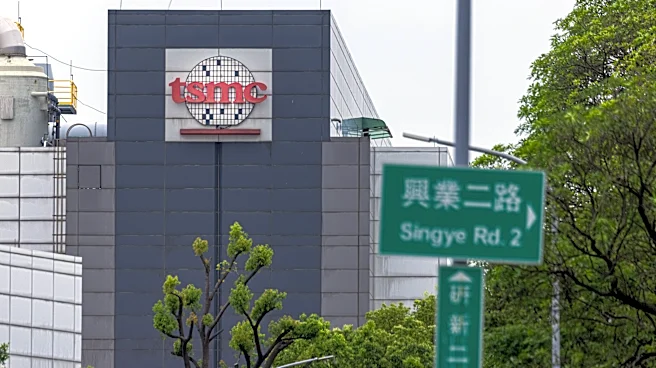
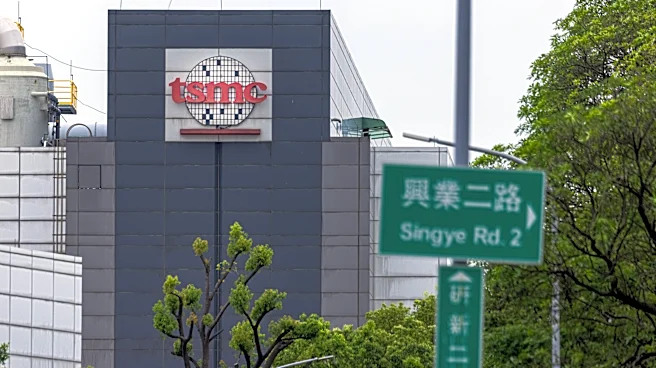
President Trump is scheduled to attend the groundbreaking ceremony for the fifth phase of Taiwan Semiconductor Manufacturing Co.'s (TSMC) expansion in Arizona. This event highlights TSMC's significant investment in U.S. chipmaking, with the company having
announced plans to spend an additional $100 billion, bringing its total pledged investment in the United States to $265 billion. This expansion is largely driven by the increasing demand for computer chips, fueled by the development of artificial intelligence, and a strategic effort to mitigate supply chain vulnerabilities by increasing domestic production. Although President Trump has attributed these investments to his tariff policies, the construction in Arizona initially commenced during the presidency of Joe Biden, with financial backing from the bipartisan CHIPS and Science Act.
Why It's Important?
This expansion is crucial for bolstering the U.S. domestic semiconductor manufacturing capabilities, which is vital for national security and economic competitiveness. Taiwan's dominant position in chipmaking has exposed supply chain vulnerabilities, making domestic production a strategic imperative. The project is expected to generate substantial employment opportunities, with the White House projecting 10,000 direct jobs and an additional 11,000 indirect jobs in the broader community. Currently, the site supports over 12,000 construction jobs. This investment also signifies a move towards greater self-reliance in critical technology sectors, reducing dependence on foreign manufacturers and strengthening the U.S. position in the global technology landscape.
What's Next?
The continued expansion of TSMC's facilities in Arizona will likely lead to further job creation and economic development in the region. The increased domestic production of advanced computer chips is expected to support U.S. tech companies like Nvidia, Apple, AMD, Broadcom, and Qualcomm, potentially leading to more resilient supply chains for these firms. The focus on artificial intelligence will continue to drive demand for these chips, ensuring the long-term relevance and growth of these manufacturing facilities. Future policy decisions, particularly regarding incentives and regulations for semiconductor manufacturing, will play a significant role in shaping the trajectory of such investments.
Beyond the Headlines
The TSMC expansion in Arizona underscores a broader geopolitical and economic shift towards reshoring critical manufacturing capabilities. This move is not merely about economic growth but also about national security, as advanced semiconductors are integral to defense systems, AI development, and various other strategic technologies. The bipartisan support for the CHIPS and Science Act highlights a consensus on the importance of domestic chip production, transcending political divides. This initiative could set a precedent for other critical industries to consider domestic expansion, fostering a more robust and secure U.S. industrial base. The long-term implications include enhanced technological sovereignty and reduced exposure to global supply chain disruptions.