




What's Happening?
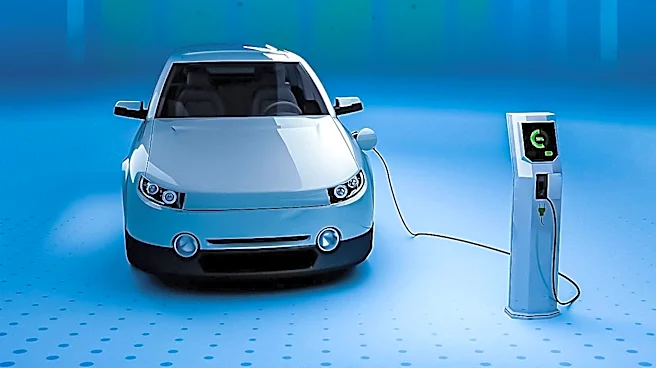
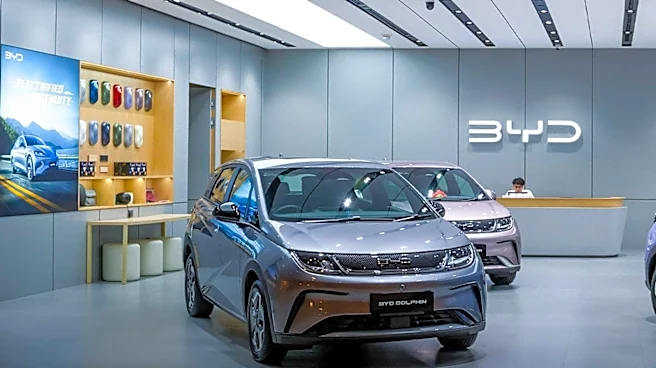
BYD CEO Wang Chuanfu has acknowledged that the company's advanced flash charging technology, capable of charging electric vehicles from 10% to 70% in five minutes, places a significant strain on existing power grids. To mitigate this, BYD is implementing
on-site energy storage solutions at its charging stations. These 'station within a station' setups utilize existing grid connections to refill storage batteries, which then deliver high-power bursts for rapid vehicle charging. However, observations indicate that during peak demand, these storage units can deplete, causing charging speeds to revert to conventional levels. A standard BYD flash-charging station is equipped with two energy storage cabinets, each with a capacity of 185 kWh. The system is designed to buffer power, allowing a modest grid connection to slowly fill the storage cabinets, which then release energy in megawatt-level bursts. If the cabinets are empty, the station operates like a conventional DC fast charger, providing a guaranteed output of at least 300 kW.
Why It's Important?
The development of ultra-fast charging technology, while beneficial for electric vehicle adoption by reducing charging times, introduces a critical challenge for existing power infrastructure. Wang Chuanfu's acknowledgment and BYD's proactive approach to on-site storage highlight a broader industry concern regarding grid stability and capacity. This issue is particularly relevant for the U.S. as it pushes for wider EV adoption and the expansion of charging networks. The reliance on on-site storage demonstrates a potential model for managing high-demand charging without requiring immediate, massive upgrades to the grid. However, the observed slowdowns during peak times suggest that current storage capacities might be insufficient for sustained high usage, especially in areas with continuous demand like highway service areas during holidays. This could impact consumer confidence in EV charging infrastructure and influence future investment strategies in both charging technology and grid improvements.
What's Next?
BYD's strategy of adding more storage cabinets is seen as a short-term solution to manage peak demand at most busy stations. The effectiveness of this approach will be closely monitored, particularly during high-traffic periods such as holiday travel rushes. For locations experiencing near-continuous demand, such as highway service areas or hubs for ride-hailing fleets, increased storage may only temporarily delay slowdowns, as the grid connection ultimately dictates the sustained power supply. Long-term solutions will likely involve more substantial infrastructure investments, such as larger grid transformers or the deployment of more charging stations to distribute demand. The industry will need to balance the cost-effectiveness of additional storage with the necessity of robust grid connections to ensure consistent ultra-fast charging capabilities. Future developments will likely focus on optimizing the interplay between grid supply, on-site storage, and charging demand to maintain high performance.
Beyond the Headlines
The challenges faced by BYD's flash charging technology underscore a fundamental tension in the rapid transition to electric vehicles: the need for advanced charging capabilities versus the limitations of existing power grids. This situation highlights the broader implications for energy policy and infrastructure development in the U.S. and globally. The ethical dimension arises in ensuring equitable access to reliable fast charging, as disparities in grid infrastructure could lead to unequal experiences for EV owners. Culturally, the expectation of instant gratification, fueled by rapid technological advancements, clashes with the physical constraints of energy distribution. This scenario could drive innovation in smart grid technologies, demand-side management, and distributed energy resources. It also emphasizes the importance of integrated planning between automotive manufacturers, energy providers, and urban planners to build a sustainable and efficient EV ecosystem.