
What's Happening?
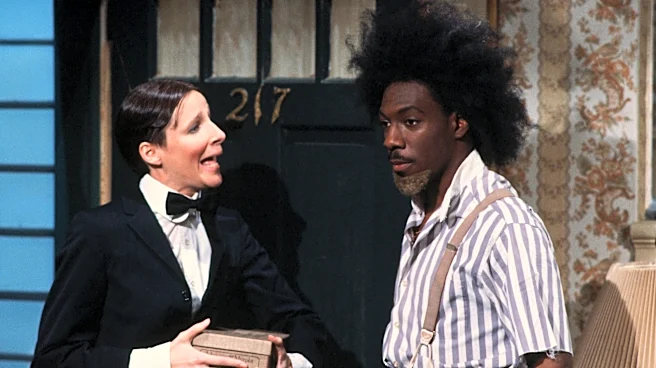
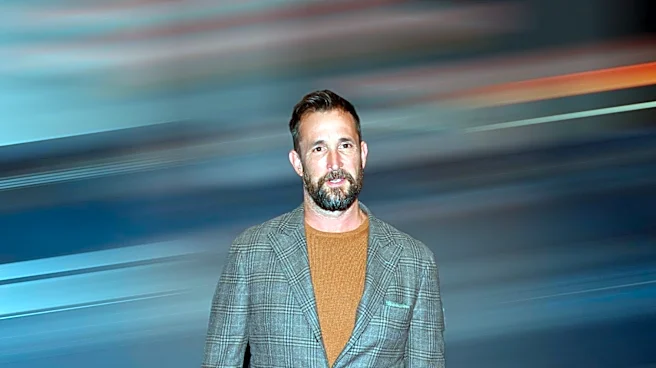
Actor Noah Wyle, known for his role as Dr. Michael 'Robby' Robinavitch in 'The Pitt,' has recounted a memorable childhood encounter with Eddie Murphy. According to CulturaOcio, Wyle shared on Amy Poehler's
podcast 'Good Hang' that when he was nine years old, he approached Murphy for an autograph. Wyle, a fan of Murphy's work on 'Saturday Night Live,' asked for an autograph, to which Murphy reportedly responded, "What are you doing awake at this hour?" When Wyle reiterated his request, Murphy's reply was, "Go to hell, man." This dismissive interaction left a lasting impression on Wyle, who stated that he always signs autographs for children, contrasting his own approach with Murphy's. The incident has since become a running joke within Wyle's family, with his daughter even creating a framed, mock-autographed photo of Murphy for him.
Why It's Important?
This anecdote offers a glimpse into the often-unseen interactions between celebrities and the public, particularly from the perspective of a child. It highlights the potential impact of such encounters, both positive and negative, on young fans. For Noah Wyle, the experience, though initially negative, became a formative memory that influenced his own approach to fan interactions once he became a public figure. It underscores the responsibility that celebrities hold in their public conduct, as even a brief, seemingly insignificant exchange can leave a lasting impression. The story also provides a humanizing element to celebrity, showing that even iconic figures like Eddie Murphy can have moments of impatience or bluntness, contrasting with their public personas. This kind of personal narrative contributes to the broader understanding of celebrity culture and fan engagement in the U.S.
What's Next?
While this is a past event, Wyle's recounting of the story ensures its continued presence in discussions about celebrity encounters and fan interactions. The anecdote serves as a cautionary tale for public figures regarding their behavior towards fans, especially children. It also reinforces Wyle's image as an approachable and fan-friendly actor, given his stated commitment to signing autographs for young admirers. The story's transformation into a family joke for Wyle demonstrates how personal experiences, even negative ones, can be recontextualized and become part of a shared family narrative. It's unlikely to have any direct impact on Eddie Murphy's career, but it adds a layer to the public perception of both actors.
Beyond the Headlines
The story touches on the psychological dynamics of fame and public interaction. For a child, meeting a hero can be a monumental event, and a negative response can be deeply disappointing. Conversely, for a celebrity, constant public demands can be overwhelming, leading to moments of frustration. This anecdote implicitly raises questions about the boundaries between public and private life for famous individuals and the expectations placed upon them by their admirers. It also highlights the generational aspect of celebrity, as Wyle's daughter's playful recreation of the autograph suggests a different, more mediated relationship with celebrity culture than Wyle experienced as a child. The incident, though minor, contributes to the ongoing cultural conversation about celebrity accessibility and the nature of fan-idol relationships in the U.S.