




What's Happening?
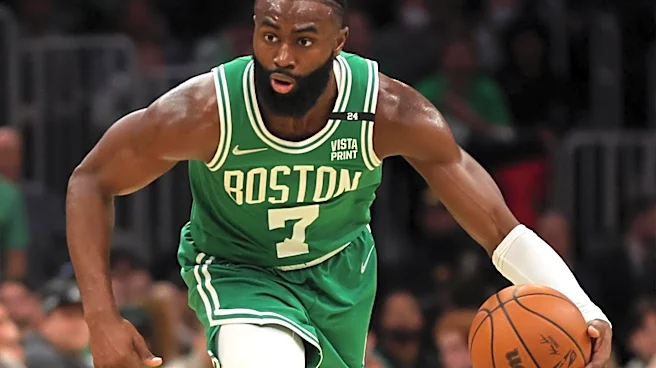
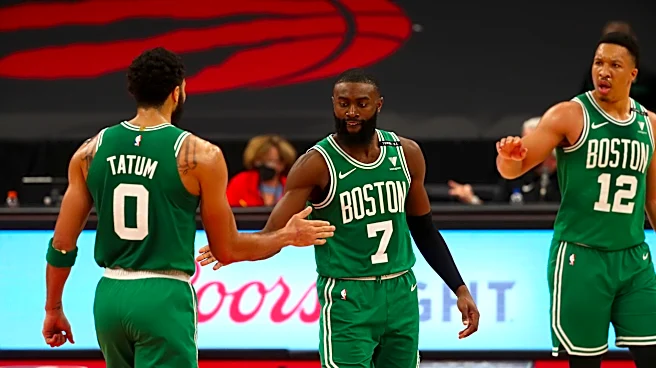
The Boston Celtics' trade of Jaylen Brown to the Philadelphia 76ers was significantly influenced by the NBA's new draft lottery system. The reform, which flattens the odds for draft picks, has made future picks from non-playoff teams more valuable. The Celtics capitalized
on this by targeting premium assets that could become top picks, rather than seeking multiple first-round picks. This strategic move reflects a shift in how teams approach trades, focusing on acquiring fewer but potentially more valuable draft assets.
Why It's Important?
The NBA's draft lottery reform is reshaping team strategies, as seen in the Celtics' approach to the Jaylen Brown trade. By prioritizing high-value future picks, the Celtics aim to secure assets that could significantly impact their long-term success. This shift away from traditional trade packages with numerous picks highlights a new norm in the NBA, where teams are more cautious with their draft capital. The Celtics' strategy could set a precedent for other teams, influencing how trades are negotiated and executed in the future.
Beyond the Headlines
The Celtics' focus on 'optionality' and avoiding being tied down by bad contracts or excessive draft commitments reflects a broader trend in the NBA. Teams are increasingly valuing flexibility and the ability to adapt to changing circumstances. This approach could lead to more strategic trades and a more competitive league, as teams seek to maximize their assets and maintain the ability to pivot quickly. The Jaylen Brown trade exemplifies this trend, showcasing how teams are navigating the evolving landscape of NBA trades and draft strategies.