








What's Happening?
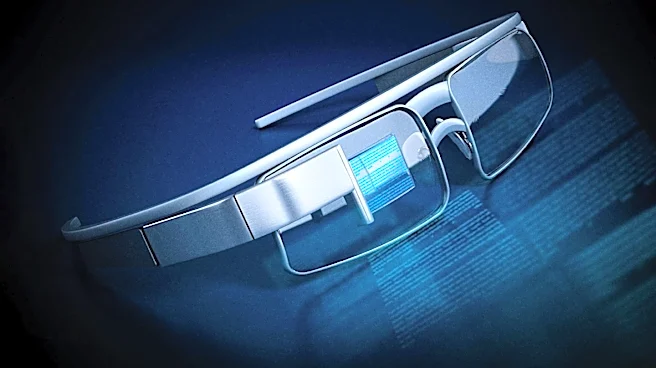
AtkinsRéalis, an engineering services and nuclear company, has announced a partnership with Optaric, an enterprise smart glasses company. This collaboration aims to accelerate the development, testing, and validation of smart glasses for use in nuclear and other
safety-critical environments. The partnership will establish a joint development and validation program, combining AtkinsRéalis' expertise in nuclear operations, human factors, radiological protection, engineering, cybersecurity, and digital innovation with Optaric's smart glasses technology. Initial development will focus on three key applications: Remote Expert Support, Records Capture, and Digital Work Packs. These applications are designed to help frontline workers access trusted information, connect with specialists, and capture digital records at the point of work, thereby supporting safer and more efficient delivery of nuclear projects and operations. The program will evaluate these applications across the entire nuclear lifecycle, including new build, commissioning, operations, and decommissioning, assessing factors such as human factors, PPE compatibility, hands-free interaction, cybersecurity, and information assurance.
Why It's Important?
This partnership is significant for the U.S. nuclear industry and other safety-critical sectors as it seeks to enhance operational safety and efficiency through technological innovation. As nuclear programs become more complex, the adoption of advanced digital solutions like smart glasses can provide workers with immediate access to critical information and expert support, reducing human error and improving response times in hazardous environments. The focus on cybersecurity and data assurance within highly regulated environments underscores the importance of secure and reliable technology integration. This initiative could set new standards for digital operations in the nuclear sector, potentially influencing regulatory frameworks and best practices for technology adoption in other high-risk industries. The successful implementation of these smart glasses could lead to increased productivity, reduced operational costs, and a stronger safety culture across the U.S. nuclear infrastructure, benefiting both workers and the public.
What's Next?
The joint development and validation program will proceed with initial activities focused on Remote Expert Support, Records Capture, and Digital Work Packs. The program will rigorously evaluate the smart glasses' applications across the full nuclear lifecycle, including new build, commissioning, operations, and decommissioning. This evaluation will consider critical factors such as human factors, compatibility with personal protective equipment (PPE), hands-free interaction capabilities, cybersecurity, information assurance, connectivity, and sovereign hosting requirements. The findings from this program are expected to build evidence and confidence for wider adoption of smart glasses technology within the nuclear industry. Success in these initial phases could lead to the expansion of smart glasses applications and potentially influence the development of new digital tools for other safety-critical sectors, driving further innovation in operational technology and safety protocols.
Beyond the Headlines
Beyond the immediate operational benefits, this partnership highlights a broader trend towards integrating advanced digital technologies into traditionally conservative and highly regulated industries. The ethical implications of enhanced surveillance and data collection in the workplace, even for safety purposes, will need careful consideration. The long-term shift could involve a more interconnected and data-driven industrial landscape, where human-machine collaboration becomes increasingly sophisticated. This could also lead to a redefinition of skill sets required for frontline workers, emphasizing digital literacy and the ability to interact with augmented reality tools. Furthermore, the success of this initiative could spur competition and innovation among technology providers to develop specialized solutions for niche industrial applications, potentially creating new markets and driving economic growth in the tech sector while simultaneously addressing critical safety and efficiency challenges in vital U.S. infrastructure.