






What's Happening?
NVIDIA has significantly expanded its Isaac open robotics development platform, introducing a new reference humanoid, datasets, and runtime, alongside updates to its robot learning framework. This expansion aims to provide developers with an integrated
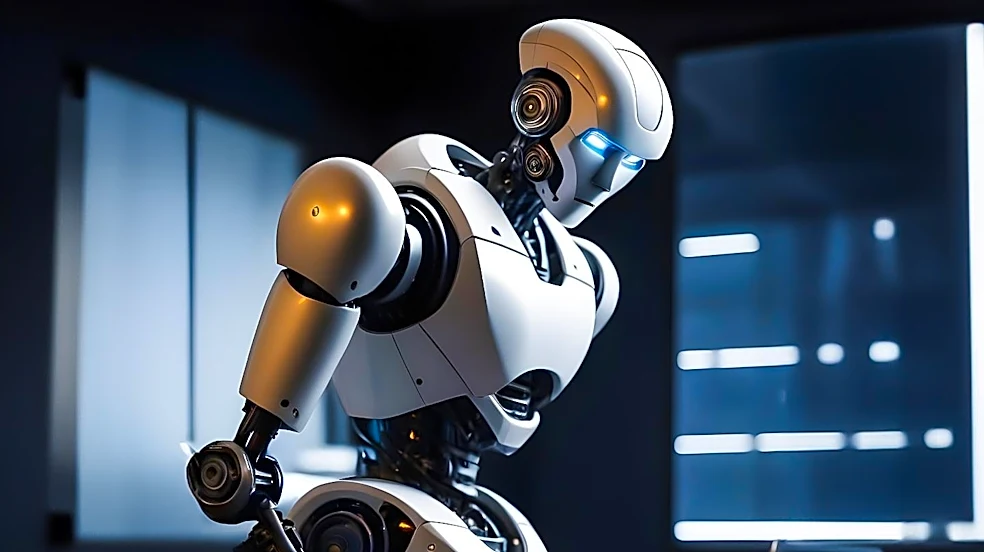
path from data to deployment, accelerating the real-world application of general-purpose robots. Key additions include Agile ONE SN, a full-stack reference humanoid preconfigured with NVIDIA Isaac GR00T and powered by the NVIDIA Jetson Thor edge AI platform. This platform unifies simulation, training, and deployment tools, reducing setup time for robotics researchers and developers. NVIDIA also released Isaac Lab 3.0, an open-source learning framework, and Isaac OS, an open-source runtime framework, to enhance robot learning and real-time performance. Additionally, new SimReady Central Library assets and the Human 1M Dataset are available to aid in synthetic data generation and training.
Why It's Important?
This advancement by NVIDIA is critical for the U.S. robotics industry and its global impact, as it addresses the growing demand for general-purpose robots capable of performing diverse tasks in various environments. By providing a comprehensive, open platform, NVIDIA is democratizing access to advanced robotics development, potentially fostering innovation across numerous sectors. The integration of simulation, training, and deployment tools on a single platform streamlines the development process, making it faster and more efficient to bring sophisticated robots to market. This could lead to significant economic benefits by enabling automation in industries previously difficult to mechanize, such as logistics, manufacturing, and even domestic applications. The emphasis on safety features, like the planned integration of NVIDIA Halos, is also crucial for ensuring the responsible deployment of these advanced machines in real-world settings, building public trust and facilitating wider adoption.
What's Next?
The new NVIDIA Isaac platform components, particularly the Agile ONE SN reference humanoid, are scheduled to be available in early 2027, aiming to advance frontier humanoid research and development. Leading institutions like Stanford University and ETH Zurich have already expressed interest. NVIDIA's strategy involves continuous collaboration with European robotics leaders such as ABB Robotics, KUKA Group, and Sereact, who are integrating NVIDIA technologies into their systems. This collaborative approach, combined with the release of open-source tools and datasets, is expected to accelerate the development and deployment of general-purpose robots. The focus will be on refining GR00T models with reinforcement learning, training dexterous manipulation skills, and generating synthetic data, ultimately moving closer to a future where robots can adapt to and perform a wide array of tasks in human environments.