





What's Happening?
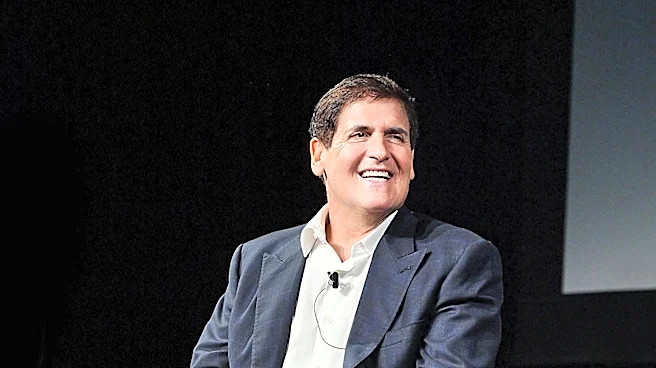
Larry Ellison, founder of Oracle, experienced a significant reduction in his estimated net worth, falling by $7.9 billion to $140.8 billion. This decline caused him to drop three positions in Forbes' real-time billionaires ranking. He was surpassed by Rob
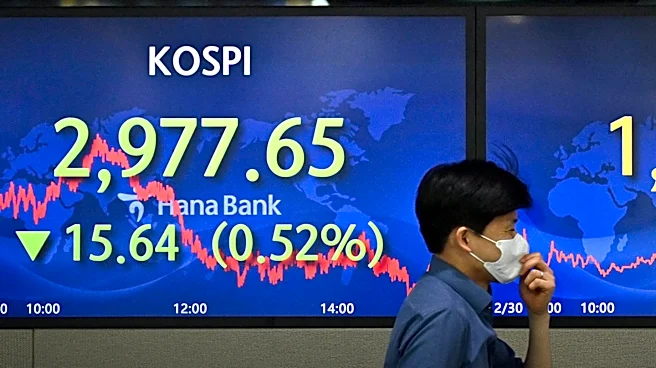
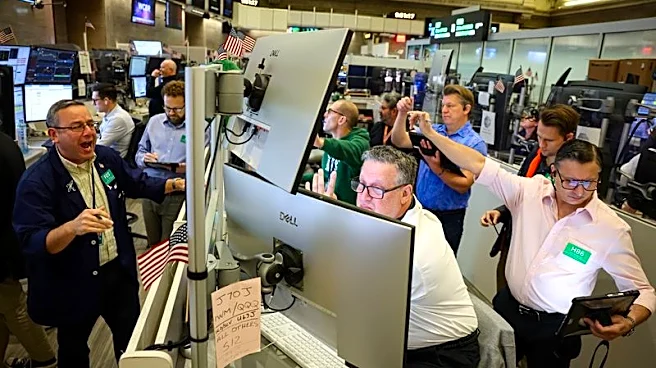
and Jim Walton, heirs to Walmart, and Amancio Ortega, co-founder of Inditex. The shift occurred after Oracle's shares fell by 7.5%, trading near $102, their lowest price since January 2024. The company's stock has seen a 47% loss year-to-date in 2026. This downturn is attributed to substantial investments in artificial intelligence infrastructure, which led Oracle to report a negative free cash flow of approximately $23.7 billion in its fiscal year 2026. Other technology companies also saw declines, with Micron, AMD, Broadcom, and Nvidia experiencing significant drops in their stock values. The S&P 500 index, heavily weighted with tech companies, also fell to its lowest level since April.
Why It's Important?
This event highlights the volatile nature of wealth in the technology sector and the significant impact of market fluctuations on high-net-worth individuals. Oracle's substantial investments in AI infrastructure, while aimed at future growth, have temporarily impacted its financial performance and investor confidence, as evidenced by the negative free cash flow. The broader decline in other major tech stocks like Micron, AMD, Broadcom, and Nvidia suggests a potential sector-wide re-evaluation or a period of increased investor caution regarding technology investments. This could signal a shift in market sentiment, where the immediate costs of ambitious technological expansion are being weighed more heavily against future potential gains. The movement of billionaires within the top rankings also reflects the dynamic competitive landscape among global enterprises and the rapid shifts in market capitalization.
What's Next?
Oracle's future performance will likely depend on how quickly its significant investments in AI infrastructure begin to yield returns and improve its cash flow. Investors will be closely watching subsequent quarterly reports for signs of revenue growth and improved profitability from these AI initiatives. The broader technology market will also be under scrutiny, as the recent declines across multiple tech giants could indicate a period of consolidation or a more cautious investment environment. The performance of the S&P 500 will continue to be a key indicator of overall market health, particularly given its heavy tech sector weighting. The competitive landscape among the world's wealthiest individuals will also remain dynamic, with further shifts possible based on company performance and market trends.
Beyond the Headlines
The substantial investments made by Oracle in AI infrastructure, leading to a negative free cash flow, underscore a critical strategic dilemma for technology companies: the balance between aggressive innovation and short-term financial stability. This situation reflects a broader trend in the tech industry where companies are pouring vast resources into AI development, betting on its transformative potential despite immediate financial pressures. The market's reaction, as seen in Oracle's stock decline, suggests that investors are increasingly scrutinizing the financial implications of such large-scale, long-term bets. This could lead to a re-evaluation of investment strategies within the tech sector, potentially favoring companies that can demonstrate a clearer path to profitability from their AI ventures. The event also highlights the immense capital required to remain competitive in the rapidly evolving AI landscape, potentially widening the gap between tech giants and smaller players.