





What's Happening?
California agricultural leaders and farmers are actively campaigning to safeguard the United States-Mexico-Canada Agreement (USMCA) in anticipation of its 2026 review. Organizations like Farmers for Free Trade, alongside Congressman Jim Costa and California Agriculture
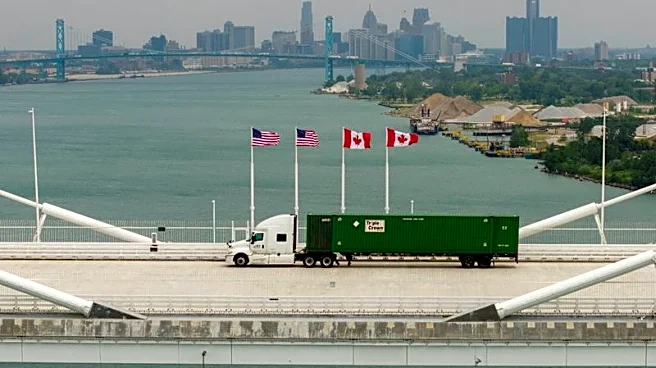
Secretary Karen Ross, recently convened in Fresno to discuss the critical importance of maintaining reliable access to Mexican and Canadian markets. These markets are vital for a diverse range of California's agricultural commodities, including cotton, tree nuts, citrus, grapes, and berries. The agricultural sector emphasizes that continued access to these international markets provides significant opportunities for producers to sell their crops and underpins the broader farm economy. The discussions highlight concerns that any alterations to the trade agreement could negatively impact the state's agricultural industry.
Why It's Important?
The preservation of the USMCA is crucial for California's agricultural sector due to its heavy reliance on export markets. Mexico and Canada represent significant destinations for a substantial portion of California's specialty crops. Roger Isom, representing the Western Tree Nut Association and the California Cotton Ginners and Growers Association, has warned that the imposition of tariffs could severely disadvantage U.S. producers. If tariffs make American agricultural products more expensive in international markets, growers could lose their competitive edge against producers from countries not facing similar trade barriers. This concern is particularly acute for specialty crop producers, who depend on exports to move a large volume of their output. Maintaining open and predictable trade relationships is seen as essential for the economic stability and growth of California agriculture.
What's Next?
As the 2026 review of the USMCA approaches, trade policy is expected to remain a central topic within the agricultural sector. Farmers for Free Trade plans to conduct additional roundtable discussions across the country to gather further input from producers and agricultural leaders. The primary objective for California agriculture and its representatives is to ensure that any potential changes to the trade agreement do not disrupt established markets or impose additional costs on producers, who are already contending with rising input and production expenses. The industry will continue to advocate for policies that protect and enhance access to key international customers, aiming to secure favorable trade conditions for the future.
Beyond the Headlines
The ongoing efforts by California's agricultural sector to protect the USMCA underscore a broader tension between free trade principles and potential protectionist policies. The emphasis on 'reliable access' and the warnings against 'tariffs' reflect a deep-seated concern within the industry about market volatility and the impact of trade disputes on long-term planning and investment. This situation highlights the intricate relationship between international trade agreements and the economic viability of specific agricultural regions. The outcome of the 2026 review could set a precedent for how future trade negotiations balance national interests with the needs of export-oriented industries, potentially influencing the global competitiveness of U.S. agriculture and its role in international food supply chains.