







What's Happening?
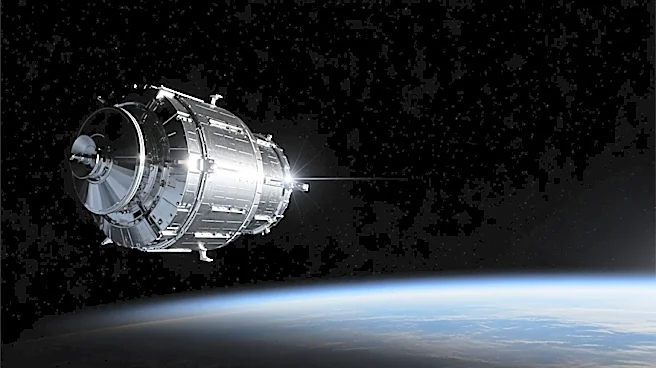
SpaceX is set to launch its first Starfall prototype on June 23, aiming to transform the economics of orbital manufacturing. The disk-shaped reentry capsule, designed to return up to 1,000 kilograms of cargo from orbit, will launch from Cape Canaveral.
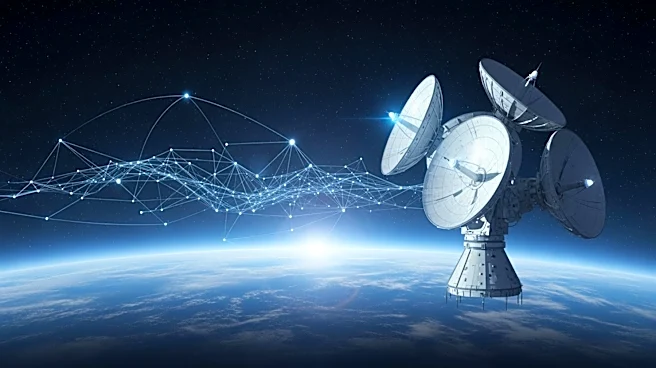
This mission is a low-profile demonstration focusing on reentry, splashdown, and recovery, with the potential to significantly impact the emerging in-space manufacturing industry. The Starfall capsule, unlike traditional conical designs, features a flat, circular disk that optimizes payload capacity and simplifies production. It relies on external propulsion for reentry, using cold-gas nitrogen thrusters for descent control. The mission will also test Starlink terminals' ability to maintain telemetry through the plasma blackout phase during reentry, a longstanding challenge in spaceflight.
Why It's Important?
The successful demonstration of Starfall could reshape the orbital manufacturing landscape by offering a more efficient and cost-effective method for returning large quantities of manufactured goods from space. This development is crucial for industries like pharmaceuticals and semiconductors, which benefit from the unique conditions of microgravity. By potentially increasing the return capacity by 30 times compared to current competitors, SpaceX could lower the cost per kilogram of returned goods, making commercial space manufacturing more viable. Additionally, the integration of Starlink technology to overcome the plasma blackout could enhance telemetry capabilities for all SpaceX reentry vehicles, improving safety and data collection during critical mission phases.
What's Next?
Following the initial demonstration, SpaceX plans a second FAA-approved test flight. Success in these tests could lead to the commercial deployment of Starfall, pending FAA vehicle operator licensing. This would position SpaceX as a direct competitor to companies like Varda Space Industries, which currently rely on SpaceX for launch services. The outcome of these tests will be closely watched by potential customers in the pharmaceutical and semiconductor sectors, as well as by competitors in the space return market.