






What's Happening?
Intel is making significant progress in its U.S. semiconductor manufacturing expansion, with developments at two major sites in Arizona and Ohio. In Chandler, Arizona, Intel has commenced equipment installation at Fab 62, located at its Ocotillo campus.
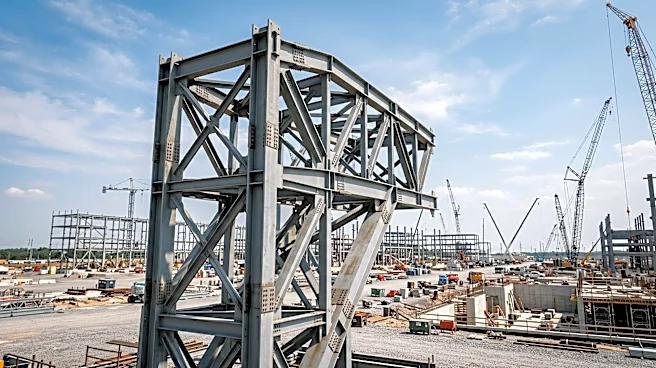
This facility is projected to become operational by the end of 2028. While the specific process technologies for Fab 62 are yet to be confirmed, it could potentially support Intel 18A, 18A-P, or 14A. Concurrently, at its Ohio One site in New Albany, Ohio, Intel has installed the first major structural truss for the project's initial semiconductor fab. The first Ohio fab is expected to begin operations in 2030–2031, with a second planned for 2032. These advancements are driven by the increasing demand for AI computing, which necessitates substantial investment in advanced semiconductor manufacturing.
Why It's Important?
Intel's expansion efforts in Arizona and Ohio are crucial for strengthening domestic chip manufacturing in the U.S. This initiative addresses the growing need for advanced semiconductors, particularly for AI infrastructure, and aims to reduce reliance on foreign supply chains. By establishing and expanding these fabrication facilities, Intel contributes to national economic security and technological independence. The investment signifies a commitment to creating high-tech jobs and fostering innovation within the U.S. The success of these projects will be vital for the semiconductor industry's ability to translate capital investment into competitive manufacturing capacity and secure customer commitments, ultimately supporting the next phase of AI infrastructure growth and maintaining the U.S.'s leadership in technology.
What's Next?
The next steps involve the continued installation of equipment and construction at both the Arizona and Ohio sites. Intel will need to clarify the specific process technologies to be deployed at Fab 62 in Arizona and ensure efficient ramp-up of production. For the Ohio One site, the focus will be on completing the first fab by 2030–2031 and progressing with the second fab for a 2032 operational target. Additionally, discussions between Intel and SK hynix regarding potential arrangements for U.S. memory chip production, possibly involving the Ohio facility, are ongoing, though no agreement has been finalized. The ability to secure sufficient customer demand will be critical for the long-term success and sustainability of these large-scale manufacturing projects.
Beyond the Headlines
The expansion of Intel's semiconductor manufacturing capabilities in the U.S. carries profound implications beyond immediate economic benefits. It represents a strategic move to re-shore critical manufacturing processes, enhancing national resilience against global supply chain disruptions. This initiative also highlights the ethical and geopolitical dimensions of semiconductor production, as control over advanced chip manufacturing is increasingly seen as a matter of national security. Culturally, these projects can revitalize local economies, creating new opportunities and fostering a skilled workforce in advanced manufacturing. The long-term success of these fabs will depend not only on technological advancements but also on sustained government support, robust talent pipelines, and a favorable regulatory environment to ensure the U.S. remains at the forefront of semiconductor innovation.