







What's Happening?
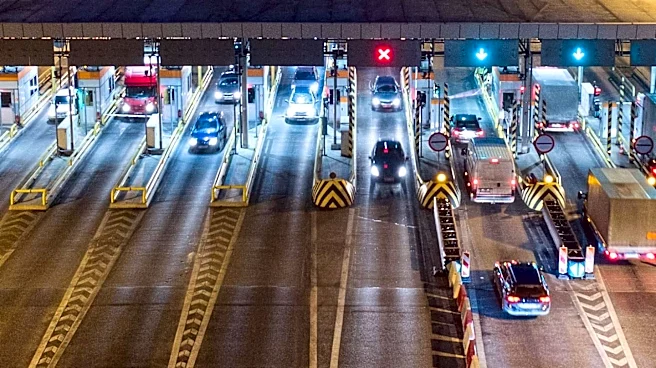
Maryland is currently owed over $818 million in unpaid tolls and penalties from out-of-state vehicles, according to a state audit. The audit revealed that the Maryland Transportation Authority (MDTA) did not fully utilize available methods to collect
this substantial debt. As of January, out-of-state vehicles had accumulated approximately $230.9 million in unpaid tolls and an additional $587.2 million in penalties. A significant portion of this debt, more than $386 million, has been outstanding for over three years. Drivers from Virginia account for the largest share of this unpaid amount, owing approximately $234.7 million, followed by drivers from Pennsylvania and New Jersey. The audit also questioned MDTA's efforts in pursuing these debts, suggesting that options such as engaging private collection agencies and establishing reciprocal agreements with other states could have been more effectively employed to recover the outstanding funds.
Why It's Important?
This substantial amount of uncollected revenue poses a significant financial challenge for Maryland. The MDTA's toll revenues are crucial for funding the operation, maintenance, and improvement of the state's toll facilities, as well as for servicing debt. The deficit of $818 million directly impacts the transportation trust fund, potentially hindering essential infrastructure projects and maintenance efforts. Beyond the financial implications, the issue sends a negative message that out-of-state drivers may not face consequences for unpaid tolls and penalties in Maryland, which could encourage further non-compliance. This situation highlights the complexities of interstate debt collection, where differing state laws, penalties, and tolling systems create hurdles. The lack of robust collection mechanisms not only deprives the state of much-needed funds but also raises questions about fairness for Maryland residents who consistently pay their tolls.
What's Next?
The MDTA is now actively working to address the issue by engaging private collection agencies to help recover some of the outstanding money. However, it remains uncertain how much of the $818.1 million will ultimately be collected. The audit's findings will likely prompt a reevaluation of MDTA's collection strategies and potentially lead to the development of more effective interstate agreements. Maryland may explore formalizing reciprocal agreements with other states to facilitate the collection of unpaid tolls and penalties across state lines. This could involve legislative efforts or diplomatic discussions with neighboring states. The situation also underscores the need for continuous auditing and oversight to ensure that state agencies are maximizing revenue collection and adhering to best practices. The public and legislative bodies will likely monitor the progress of these collection efforts and any proposed reforms to prevent similar situations in the future.
Beyond the Headlines
The challenge of collecting interstate tolls and penalties reflects a broader issue of jurisdictional complexities in a highly mobile society. As states increasingly rely on tolling for infrastructure funding, the ability to enforce payment across state lines becomes paramount. This situation could catalyze a push for more standardized interstate agreements or even federal intervention to streamline toll collection mechanisms. The ethical dimension of drivers from one state benefiting from another state's infrastructure without contributing their fair share also comes into play. This could lead to public discourse on driver accountability and the responsibilities of motorists when traveling across state borders. Furthermore, the reliance on private collection agencies raises questions about their effectiveness, costs, and potential impact on individuals. The long-term implications could include a shift towards more integrated national tolling systems or enhanced data sharing between state motor vehicle departments to ensure greater compliance and financial equity.