
What's Happening?
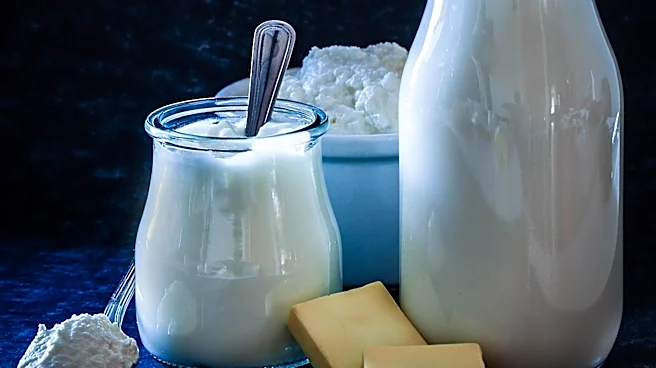
The USDA Agricultural Marketing Service's weekly grocery-store dairy feature activity report, for the period ending November 19, 2026, indicates a notable rise in conventional dairy advertisements. Conventional
dairy ads increased by 18% in week 46, while organic dairy ads saw a 4% increase. Within the organic segment, milk and yogurt advertisements experienced declines of 12% and 25% respectively. Butter emerged as the second most advertised conventional dairy commodity, with a 61% surge in total ads as November holiday celebrations approached. The average price for a 1-pound package of butter was $3.24, marking a $0.60 decrease from the previous week. For conventional cheese, weighted average advertised prices were $2.46 for 6-8 ounce shredded packages, $3.05 for block, and $2.69 for sliced, with block cheese showing the largest average price decrease of $1.05. The report also highlighted that the 48-64-ounce milk container size, averaging $4.17, was more prevalent in ads than the 14-16-ounce size, which averaged $4.16. Conventional half-gallon containers averaged $3.40, compared to $4.22 for organic half gallons, indicating an organic premium of $0.82.
Why It's Important?
This USDA report offers crucial insights into consumer purchasing trends and retail strategies within the U.S. dairy market, particularly as the holiday season approaches. The significant increase in conventional dairy advertisements, especially for butter, suggests retailers are anticipating higher demand for traditional holiday ingredients. This trend could benefit conventional dairy producers and suppliers, potentially leading to increased sales volumes. Conversely, the decline in organic milk and yogurt advertisements might indicate a shift in consumer focus or a strategic decision by retailers to prioritize conventional options during this period. The price decreases observed in butter and block cheese could stimulate consumer purchases, making these products more accessible and attractive. For dairy farmers and processors, these advertising trends can inform production planning and pricing strategies, while consumers may find more promotional deals on conventional dairy products in the coming weeks. The data also highlights the persistent price premium for organic dairy, which continues to influence consumer choices.
What's Next?
In the immediate future, consumers can expect to see continued promotions and potentially competitive pricing on conventional dairy products, particularly butter and cheese, as retailers aim to capitalize on holiday demand. Dairy producers and retailers will likely monitor these trends closely to adjust their inventory and marketing efforts. The USDA's ongoing weekly reports will provide further insights into whether these advertising trends persist or shift as the holiday season progresses. The observed price decreases for certain dairy items may continue to attract budget-conscious shoppers, potentially boosting sales volumes for these categories. For the organic dairy sector, a continued decline in advertising could necessitate a re-evaluation of marketing strategies or product positioning to regain consumer interest. The data also sets a benchmark for future seasonal sales, allowing the industry to better predict and prepare for demand fluctuations.
Beyond the Headlines
The observed advertising trends reflect broader economic and consumer behavior patterns. The strong focus on conventional dairy products, especially butter, during the holiday season underscores the enduring cultural significance of traditional ingredients in American households. This could also indicate a consumer preference for value and familiarity during economically uncertain times, as conventional products often carry a lower price point than their organic counterparts. The disparity in advertising between conventional and organic dairy might also signal a strategic pivot by retailers to cater to a wider consumer base, prioritizing volume sales over niche markets during peak shopping periods. This could have long-term implications for the growth trajectory of the organic dairy market if sustained. Furthermore, the report implicitly highlights the power of retail advertising in shaping consumer purchasing decisions and influencing market dynamics within the competitive U.S. food sector.