



What's Happening?
The Portugal national football squad is experiencing significant internal tension following the departure of captain Bernardo Silva from the team's camp. Officially, the Portuguese Football Federation cited muscular problems for Silva's absence, stating
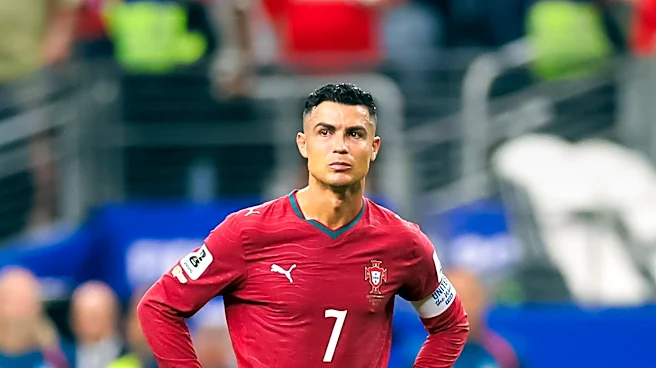
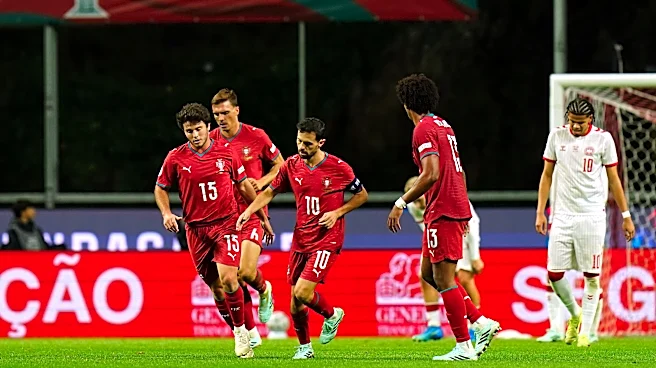
he would not travel for the UEFA Nations League match against Wales. However, reports from *Sport* and *Record* suggest Silva left after a conversation with head coach Jorge Jesus, expressing his unhappiness over a lack of playing time. This incident mirrors a previous situation involving Cristiano Ronaldo, who also left the camp after discussions with Jesus regarding his role. Silva had publicly voiced his frustration before the recent 4-1 defeat to Denmark, where he played only the last 11 minutes but scored Portugal's sole goal. This development adds pressure on Jesus, especially after the team's heavy loss to Denmark and Ronaldo's recent retirement from international football.
Why It's Important?
This internal discord within the Portuguese national team carries significant implications for its performance and stability. The departure of key players like Bernardo Silva, especially the captain, due to disagreements over playing time can severely impact team morale and cohesion. For a national team, unity and a clear understanding of roles are crucial for success in international competitions. The repeated scenario, first with Cristiano Ronaldo and now with Silva, suggests a potential systemic issue in how player roles and expectations are managed under coach Jorge Jesus. This could lead to further instability, affecting future match results and potentially deterring other top players. The situation also raises questions about leadership within the squad and the coach's ability to manage high-profile players, which is vital for maintaining a competitive edge on the international stage.
What's Next?
The immediate consequence is that Portugal will face Wales in their upcoming UEFA Nations League match without Bernardo Silva, as well as without Rúben Dias and João Palhinha, who are suspended. This significantly weakens the squad for a crucial fixture. Coach Jorge Jesus will be under intense scrutiny to demonstrate his ability to maintain tactical control and manage the dressing room amidst these challenges. The Portuguese press will likely continue to focus on the atmosphere within the camp and the coach's relationship with his players. Depending on the team's performance against Wales, there could be further calls for changes in coaching staff or a deeper investigation into the team's internal dynamics. The long-term impact could affect player selections for future tournaments and the overall perception of the national team's management.
Beyond the Headlines
The recurring issue of star players leaving the national team camp due to dissatisfaction with playing time highlights a broader challenge in modern football: managing the expectations and egos of elite athletes. This situation could reflect a shift in player power dynamics, where top players are increasingly willing to assert their demands, even at the national team level. Ethically, it raises questions about the balance between individual player ambition and collective team success. Legally, while players are typically bound by national team call-ups, disputes over playing time can strain relationships and potentially lead to more formal grievances if not handled carefully. Culturally, the departure of a captain like Silva, following Ronaldo's exit, could signal a period of transition and potential instability for Portuguese football, challenging its established hierarchy and team culture.