
What's Happening?
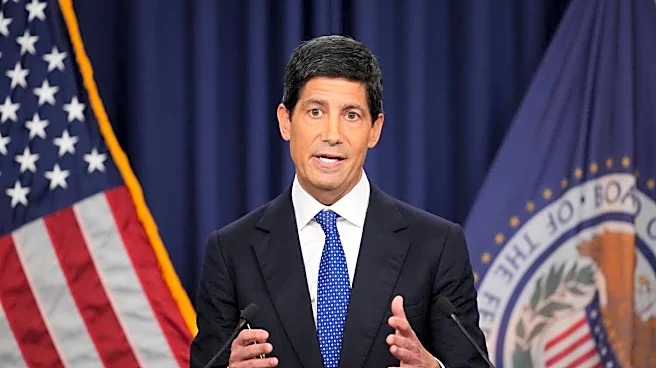
John Williams, President of the New York Federal Reserve, has indicated that there is no immediate need for an interest rate hike in October. Speaking in Buffalo, N.Y., Williams stated that the Federal Reserve has sufficient
time to gather more economic data before making further decisions on monetary policy. This stance aligns with the median forecast of the rate-setting committee, which anticipates one additional rate hike later this year, likely in December, rather than in October. Williams, who is also the vice chair of the Federal Open Market Committee, noted that he expects inflation to be around 3.5% this year, acknowledging the increasing inflationary impact from AI-related demand shocks. This marks a shift from his earlier projections, where he had anticipated a decline in oil prices and a natural reduction in inflation. His comments led to a decrease in market expectations for an October rate hike, with odds dropping from 70% to approximately 50%.
Why It's Important?
The statements from a key figure like John Williams, a member of the Fed's leadership 'troika,' significantly influence market sentiment and economic expectations. By downplaying an October rate hike, Williams provides a clearer signal to investors and businesses regarding the Federal Reserve's cautious approach to monetary policy. This could lead to reduced volatility in financial markets, as the uncertainty surrounding immediate rate adjustments lessens. For consumers, a delayed rate hike might mean a temporary reprieve from higher borrowing costs on loans and mortgages. However, Williams's revised outlook on inflation, now expecting larger and longer-lasting effects from energy prices and the impact of AI-related demand, suggests that inflationary pressures remain a concern. This could influence future business investment decisions and consumer spending patterns, as companies and individuals adjust to the prospect of sustained higher prices and potential future rate increases.
What's Next?
Following Williams's remarks, market participants will closely monitor upcoming economic data releases to gain further clarity on inflation trends and overall economic health. The Federal Reserve's next meeting in October will be observed for any shifts in sentiment, though a rate hike now appears less probable. Attention will likely turn to the December meeting, which Williams hinted as a more plausible timeframe for another rate increase to help bring inflation closer to the Fed's 2% target. Businesses and consumers should prepare for the possibility of continued vigilance from the Fed regarding inflation, with potential for further tightening later in the year. The ongoing assessment of energy prices and the 'inflationary impact of the AI-related demand shock' will be critical factors guiding future monetary policy decisions, influencing everything from investment strategies to household budgets.
Beyond the Headlines
Williams's comments underscore the complex balancing act faced by the Federal Reserve in managing inflation while supporting economic stability. The mention of 'AI-related demand shock' as an inflationary factor highlights an emerging and less conventional challenge for monetary policy. This suggests that technological advancements, while driving productivity, can also introduce new inflationary pressures that central banks must consider. The Fed's cautious approach to rate hikes, prioritizing data accumulation, reflects a broader strategy to avoid over-tightening and potentially triggering an economic downturn. This careful calibration of policy, influenced by evolving economic indicators and novel factors like AI's impact, will shape the long-term trajectory of the U.S. economy, affecting employment, investment, and the cost of living for years to come.