





What's Happening?
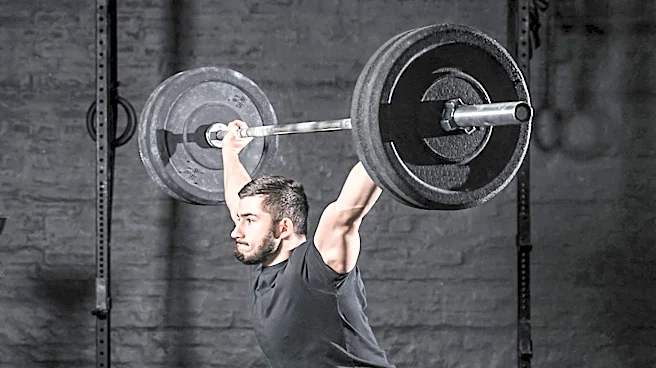
To achieve continuous strength gains, individuals must implement progressive overload in their training, meaning the challenge to muscles must increase as they adapt and become stronger. Simply repeating the same workout with the same weights and repetitions
will lead to a plateau, where muscles maintain existing strength but do not further develop. While increasing weight is a common method, other strategies for progressive overload include increasing repetitions, adding sets, improving range of motion, slowing down movements, or trying more challenging exercise variations. The key is to make gradual, manageable changes to provide a new stimulus for muscle growth and adaptation, rather than constantly seeking entirely new exercises.
Why It's Important?
This principle is fundamental for anyone engaged in strength training, from casual gym-goers to serious athletes in the U.S. Without progressive overload, individuals risk stagnation in their fitness journey, potentially leading to demotivation and a failure to achieve desired physical improvements. For women, there's a particular emphasis on overcoming the reluctance to increase weights, debunking the myth that heavier lifting automatically leads to 'bulkiness.' Understanding and applying progressive overload is crucial for maximizing bone density, preventing injuries, and supporting long-term health. This knowledge empowers individuals to optimize their workouts, ensuring their efforts translate into tangible and sustained strength development, impacting overall physical health and functional capacity.
What's Next?
Individuals are encouraged to regularly assess their workouts and identify when exercises become too comfortable, signaling a need for increased challenge. This involves paying attention to how the final repetitions of a set feel; if they are too easy, it's time to progress. The focus should be on gradual changes rather than drastic overhauls, allowing the body sufficient time for recovery and adaptation. Fitness professionals and programs will likely continue to emphasize education on progressive overload techniques, offering varied strategies beyond just increasing weight. This will help individuals, particularly women, build confidence in challenging themselves appropriately and effectively, leading to more consistent and rewarding strength training outcomes.
Beyond the Headlines
The concept of progressive overload extends beyond physical training into various aspects of personal development and skill acquisition. It highlights the universal principle that continuous growth requires consistently pushing beyond one's current comfort zone. In a broader sense, it challenges the notion that 'more' is always 'better,' instead advocating for 'smarter' and 'more challenging' within one's capacity. This principle can foster a mindset of continuous improvement and resilience, encouraging individuals to embrace challenges and adapt their strategies as they evolve. It also subtly addresses the psychological barriers to progress, such as fear of failure or discomfort, by reframing challenge as a necessary component of growth rather than an obstacle.