




What's Happening?
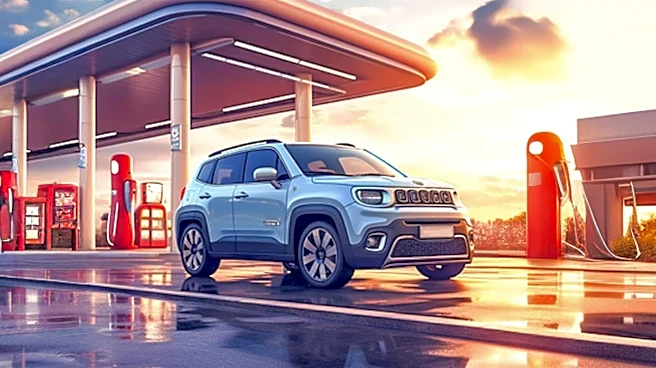
Sinopec, China's largest fuel retailer, has converted a gas station in Shanghai into an electric vehicle (EV) charging hub in partnership with BYD. The transformation involved removing underground gasoline tanks and installing BYD's 1,500 kW flash chargers,
marking a significant shift towards supporting EV infrastructure. The station now features six 'T'-shaped chargers, each with two cables, providing 12 charging spots. These chargers are capable of delivering a rapid charge, taking a compatible car from 10% to 70% in about five minutes. The partnership between Sinopec and BYD aims to expand this model across Sinopec's extensive network of over 30,000 service stations.
Why It's Important?
This development represents a strategic move by Sinopec to adapt to the growing demand for electric vehicles in China, which is rapidly transitioning to a majority-electric passenger market. By converting its existing gas stations into EV charging hubs, Sinopec is positioning itself to retain its market share and capitalize on the increasing number of EVs on the road. This initiative also highlights the potential for traditional oil companies to diversify their operations and invest in sustainable energy solutions. The partnership with BYD, a leading EV manufacturer, provides Sinopec with the technology and expertise needed to implement high-capacity charging infrastructure efficiently.
Beyond the Headlines
The Sinopec-BYD partnership reflects a broader trend of oil companies investing in renewable energy and EV infrastructure as part of a global shift towards sustainability. This move could set a precedent for other oil companies to follow, potentially accelerating the transition to electric mobility worldwide. Additionally, the use of buffered-battery technology to enable megawatt charging without extensive grid upgrades could serve as a model for other regions looking to expand their EV charging capabilities. As the EV market continues to grow, the integration of such innovative solutions will be crucial in meeting the demands of a sustainable transportation future.