




What's Happening?
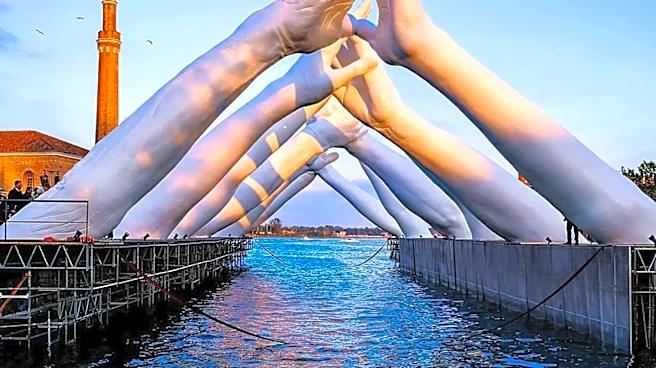
Virginia Commonwealth University School of the Arts in Qatar (VCUarts Qatar) is presenting its collective exhibition, 'Aghrab Idrāk: Thresholds of Perception,' as an Official Collateral Event at the Venice Biennale 2026. The exhibition, running from June
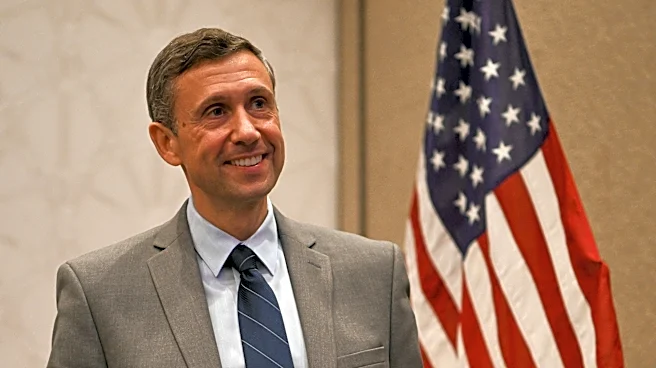
1 to November 22, 2026, at the Palazzo Cavanis, features ten interdisciplinary research labs from the university's Institute for Creative Research (ICR). Co-curated by Dr. Hesperia Iliadou and Chase Westfall, the presentation spans diverse fields such as robotics, spatial typography, soundscapes, and nanotechnology. The exhibition aims to challenge Western-centric methodologies and terra-centric perspectives by showcasing a 'chorus of live, material, and sensory investigations' rather than a passive display of finished artifacts. Dean Amir Berbić emphasized that the exhibition shares work emerging from years of creative research in Qatar, believing that creative research actively shapes cultural understanding.
Why It's Important?
This exhibition is significant as it highlights the growing influence and global reach of U.S. academic institutions, specifically VCUarts, through its international campus in Qatar. By participating in a prestigious international event like the Venice Biennale, VCUarts Qatar elevates its profile and demonstrates its commitment to fostering interdisciplinary creative research that addresses complex global questions. The exhibition's focus on challenging Western-centric methodologies and incorporating diverse cultural perspectives, particularly from the Gulf region, contributes to a more inclusive global dialogue in art and design. This initiative also strengthens cultural ties between the U.S. and Qatar, showcasing collaborative efforts in education and innovation. For the U.S. art and design community, it represents an opportunity to engage with and learn from non-Western approaches, potentially enriching pedagogical practices and artistic expressions domestically. It also underscores the role of academic institutions in driving cultural diplomacy and intellectual exchange on an international stage.
What's Next?
Following its run at the Venice Biennale, the 'Aghrab Idrāk: Thresholds of Perception' exhibition may tour other international venues or inspire further collaborative projects between VCUarts Qatar and other global institutions. The insights and methodologies presented, particularly those challenging traditional perspectives, could influence future research and curriculum development within VCUarts and other design schools. The success of this collateral event could also encourage more U.S. universities with international campuses to seek similar high-profile platforms for showcasing their global research and creative output. Additionally, the exhibition's themes, such as the intersection of technology, craft, and cultural narratives, are likely to spark ongoing discussions within the art and design communities about the role of art in addressing social, cultural, and environmental issues. The partnerships with Qatar Foundation and Qatar Museums suggest a continued commitment to fostering creative research and cultural exchange in the region.
Beyond the Headlines
The 'Aghrab Idrāk: Thresholds of Perception' exhibition delves into the deeper implications of cultural exchange and the redefinition of knowledge production in a globalized world. By presenting research that originates from a dual-campus model (Richmond, Virginia, and Doha, Qatar), VCUarts demonstrates how diverse cultural landscapes can serve as incubators for innovative design solutions. The exhibition's emphasis on 'strange knowledge' or 'unusual perception' (the meaning of 'Aghrab Idrāk') suggests a philosophical inquiry into how different ways of knowing can converge and challenge established paradigms. This approach fosters a critical examination of the biases embedded in contemporary digital infrastructure, as seen in projects addressing the Latin alphabet bias in technology. Ultimately, the exhibition acts as a powerful statement on the importance of hybridity, plurality, and responsiveness to context in creative research, transforming individual observations into collective insights and promoting a more nuanced understanding of global interconnectedness.