







What's Happening?
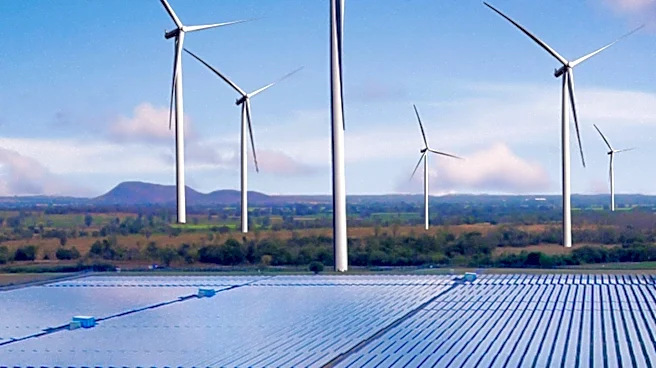
The Central Electricity Authority (CEA) in India has circulated a draft amendment to its technical standards, proposing that ground-mounted solar and onshore wind plants commissioned after July 1, 2027, must include co-located energy storage. This storage is mandated
to have a minimum duration of two hours at not less than 10% of the plant's capacity, along with grid-forming control on at least 15% of inverters. This requirement, while modest in scale, signifies a shift in responsibility, moving intermittency management from the system to the generator. Historically, solar plants have primarily focused on generation when conditions permit, selling power into an existing offtake obligation. The new standard introduces a direct responsibility for managing when the plant's output reaches the grid. This move aligns with other developments in the Indian power sector, indicating a broader reorganization around delivery rather than solely the cost of production, especially as the cost of solar generation has become competitive with commercial and industrial tariffs.
Why It's Important?
This proposed regulation is significant for the U.S. renewable energy sector as it highlights a global trend towards integrating energy storage with intermittent renewable sources to enhance grid stability and reliability. While the immediate impact is on India, such policies in major global markets can influence technology development, manufacturing trends, and investment strategies in the U.S. For instance, increased demand for co-located storage solutions in India could drive innovation and cost reductions in battery technology and grid-forming inverters, which could then benefit U.S. projects. U.S. companies involved in renewable energy development, battery manufacturing, and grid technology may find new opportunities or face increased competition as global markets adapt to these evolving standards. The shift from optional to structural storage requirements underscores the growing recognition that grid modernization and stability are paramount for high renewable energy penetration, a challenge also faced by various U.S. states and utilities.
What's Next?
The draft amendment is currently under consideration, and its finalization will dictate the specific implementation timeline and compliance requirements for new solar and wind projects in India. Following its adoption, renewable energy developers in India will need to integrate energy storage solutions into their project designs and financial models to meet the new standards. This will likely spur further investment in battery storage manufacturing and grid integration technologies within India. For U.S. stakeholders, monitoring the effectiveness and challenges of this policy in India could provide valuable insights for future domestic energy policy decisions, particularly concerning grid modernization and the integration of large-scale renewable energy. The policy's success could also encourage other nations, including the U.S., to consider similar mandates for enhancing grid resilience and managing renewable energy intermittency.
Beyond the Headlines
The deeper implication of this policy is the redefinition of a renewable energy plant's role from a simple power generator to a more active participant in grid management. This shift acknowledges the inherent intermittency of solar and wind power and places a greater onus on developers to provide dispatchable and stable electricity. This could lead to a more sophisticated and resilient grid infrastructure globally, including in the U.S., where grid operators are increasingly grappling with similar challenges. Furthermore, the policy could accelerate the development of advanced grid-forming inverter technologies and energy management systems, fostering a new era of smart grids. The economic implications extend beyond direct project costs, potentially influencing electricity market designs, ancillary service markets, and the valuation of renewable energy assets, as projects with integrated storage may command higher prices due to their enhanced reliability and grid support capabilities.