




What's Happening?
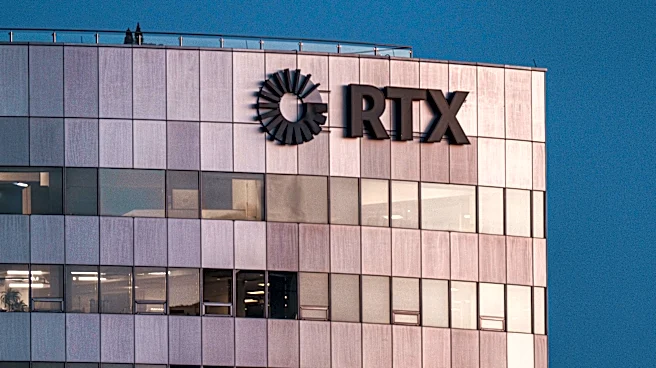
RTX Corporation, formerly known as Raytheon Technologies Corporation, has rebranded and refined its focus to advanced systems and services for commercial, military, and government clients globally. The company, which trades on the New York Stock Exchange
under the ticker RTX, was formed from the merger of United Technologies Corporation (UTC) and Raytheon Company in April 2020. Following the spin-off of UTC's Carrier and Otis businesses, the entity narrowed its operations to aerospace and defense. The rebranding to RTX Corporation occurred in July 2023 to establish a unified identity across its three primary business segments: Collins Aerospace, Pratt & Whitney, and Raytheon. Headquartered in Arlington, Virginia, the company employs approximately 180,000 individuals worldwide. Christopher T. Calio assumed the role of chief executive officer in May 2024 and is slated to become chairman in 2025.
Why It's Important?
RTX Corporation's strategic focus on aerospace and defense positions it as a significant player in both global commercial aviation and national defense markets. This diversified approach allows the company to potentially mitigate risks, as strength in one sector can offset softness in another. The company benefits from long-cycle defense programs and a substantial installed base of commercial aircraft engines, which generate recurring aftermarket revenue. Its technology leadership, exemplified by Pratt & Whitney's geared turbofan engines and Raytheon's defense systems, places it among top-tier aerospace and defense firms. The Arlington, Virginia headquarters facilitates close ties with U.S. government defense customers, which is crucial for securing government contracts and influencing defense procurement choices. The company's performance is sensitive to macroeconomic conditions affecting air travel and government budgets, highlighting the importance of its strategic diversification.
What's Next?
RTX Corporation will continue to navigate the complexities of the commercial aerospace and defense sectors. Its performance will be influenced by global air travel demand, fuel prices, and airline financial health on the commercial side, and by government budgets and procurement decisions on the defense side. The company will also need to manage operational and regulatory challenges, such as the ongoing inspection program for certain Pratt & Whitney geared turbofan engines due to a manufacturing issue. The leadership of Christopher T. Calio as CEO and future chairman will be critical in guiding the company through these challenges and leveraging its market position and innovation pipeline. Investors will closely monitor the company's ability to maintain its competitive advantages and generate recurring revenue from its extensive installed base of engines and systems.
Beyond the Headlines
The rebranding and strategic focus of RTX Corporation underscore a broader trend in the aerospace and defense industry towards consolidation and specialization. By streamlining its identity and concentrating on core competencies, RTX aims to enhance its market position and operational efficiency. The company's reliance on both commercial and government contracts highlights the intricate relationship between private industry and national security. The challenges faced, such as manufacturing issues and regulatory investigations, reflect the high stakes and stringent requirements within these sectors. The company's ability to innovate and adapt to evolving technological landscapes, particularly in areas like advanced defense systems and aircraft engines, will be crucial for its long-term success and its role in supporting U.S. and allied forces.