





What's Happening?
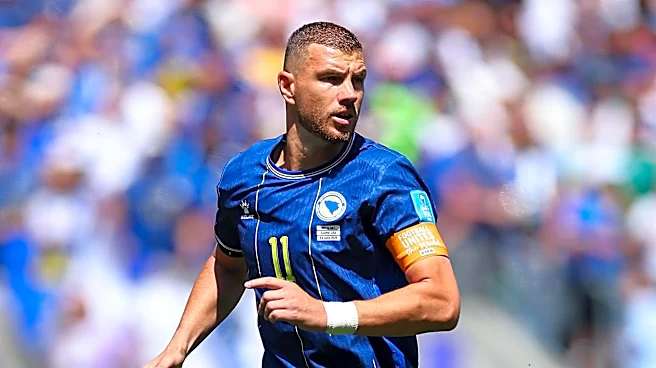
Esmir Bajraktarevic, a 21-year-old soccer player known as the 'Milwaukee Messi,' is set to play for Bosnia and Herzegovina against the United States in the 2026 FIFA World Cup Round of 32. Despite being born in the U.S., Bajraktarevic chose to represent
Bosnia, a decision influenced by his family's history. His parents, who fled Bosnia during the 1995 genocide, settled in Wisconsin, where Bajraktarevic was born. Initially, he played for the U.S. at the youth level but later switched allegiance to Bosnia, driven by a desire to honor his family's past. Bajraktarevic's pivotal role in Bosnia's qualification, including scoring a decisive penalty against Italy, highlights his capability in high-pressure situations.
Why It's Important?
Bajraktarevic's decision underscores the complex interplay of identity, heritage, and sports. His choice to represent Bosnia, despite his American upbringing, highlights the emotional and cultural ties that influence athletes' national allegiances. This decision could impact U.S. soccer, as it loses a talented player to another nation. It also reflects broader themes of immigration and identity, resonating with many in the U.S. who navigate dual cultural identities. For Bosnia, Bajraktarevic's participation is a significant boost, potentially enhancing their performance on the world stage and inspiring others in the Bosnian diaspora.
What's Next?
As Bosnia faces the U.S. in the World Cup, Bajraktarevic's performance will be closely watched. A strong showing could further solidify his status as a key player for Bosnia and influence future decisions of dual-nationality athletes. The match's outcome will determine which team advances, with significant implications for both nations' World Cup journeys. For Bajraktarevic, this game is not just about sports but also about personal and cultural affirmation, potentially inspiring other athletes with similar backgrounds to embrace their heritage.