






What's Happening?
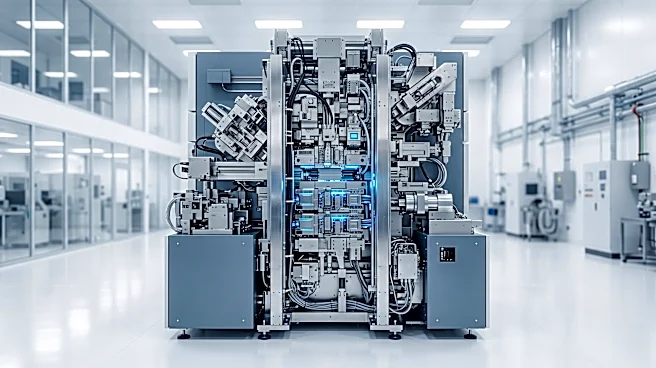
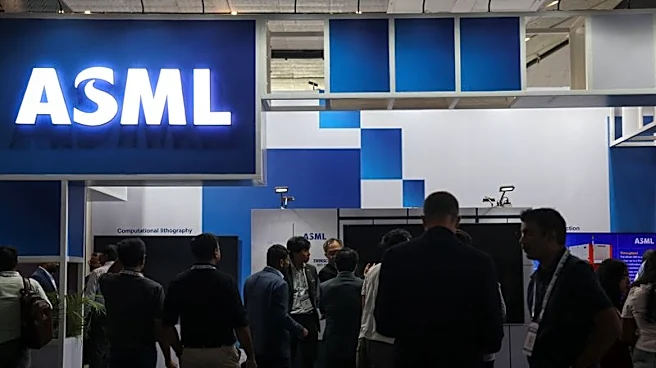
ASML, the Dutch company and world's sole producer of advanced lithography machines essential for chip manufacturing, has announced it will be unable to fully meet the global demand for its chip-making tools in 2027 and 2028. This shortfall comes despite
the company's efforts to expand capacity, including a previously announced 30% increase for 2027 and ongoing investigations into further expansions for 2028 and beyond. The demand is largely driven by the booming artificial intelligence (AI) sector, which requires increasingly sophisticated chips. Customers are reportedly attempting to place orders for as far out as 2029 and 2030, highlighting the significant and sustained need for ASML's technology. The company has, however, raised the lower end of its 2026 sales guidance to between €44 billion and €45 billion, and its shares saw a 2.8% increase.
Why It's Important?
ASML's inability to meet demand has significant implications for the global technology industry, particularly for U.S. companies heavily reliant on advanced semiconductors for AI development, data centers, and consumer electronics. The bottleneck in chip tool supply directly impacts the production capacity of major chipmakers, potentially slowing down innovation and deployment of AI technologies. This situation could exacerbate existing supply chain vulnerabilities and lead to increased costs for chips, which would then ripple through various sectors, from automotive to telecommunications. For the U.S. economy, a constrained supply of advanced chips could hinder growth in critical technology sectors and impact national competitiveness in AI and other high-tech fields. Companies that depend on these chips may face delays in product launches and reduced market share, while those with existing chip inventories or alternative supply strategies might gain a competitive edge.
What's Next?
ASML is actively exploring options to further increase its production capacity beyond the already planned expansions, including the construction of a second campus with its first phase due in 2029. However, given the long lead times for manufacturing these complex machines—over a year between order and delivery—any significant increase in output will take time to materialize. The ongoing high demand is likely to maintain pressure on chip prices and could prompt further investment in alternative chip manufacturing technologies or regional production capabilities. Major stakeholders, including governments and leading technology companies, will likely continue to push for solutions to diversify the supply chain and reduce reliance on a single critical supplier. The situation also underscores the strategic importance of semiconductor manufacturing and the need for long-term planning in the face of rapidly evolving technological demands.
Beyond the Headlines
The persistent demand for ASML's machines, coupled with its production limitations, highlights a deeper structural challenge within the global technology ecosystem: the concentration of critical manufacturing capabilities in a few highly specialized companies. This creates a single point of failure for the entire semiconductor industry, making it vulnerable to disruptions and geopolitical tensions. The situation also raises questions about the sustainability of rapid technological advancement, particularly in AI, if the foundational hardware cannot keep pace. Ethically, it prompts discussions about equitable access to advanced technology and the potential for a widening gap between nations or companies that can secure supply versus those that cannot. The long-term implications could include a re-evaluation of globalized supply chains, increased nationalistic approaches to semiconductor production, and potentially a shift towards more modular or diversified chip architectures to mitigate future bottlenecks.